
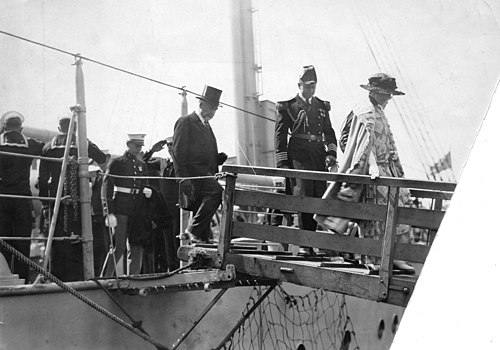
On July 26, 1923, stepping off the gangplank of the naval transport ship USS Henderson onto the docks of Vancouver, British Columbia, Warren G. Harding became the first sitting United States President to cross the border and officially visit Canada. Traveling on his ambitious, multi-week “Voyage of Understanding” designed to reconnect his administration with voters in the Pacific Northwest and the remote territory of Alaska, Harding sought a grand diplomatic stage to bolster his political standing back home.
Arriving in Vancouver, he was greeted by an overwhelming, enthusiastic crowd of over 40,000 Canadian citizens who flooded Stanley Park to witness a historic milestone in North American international relations. Beneath the grand ceremonial pageantry and the euphoric cheers lay a calculated diplomatic effort to project global stability and reinforce the vital economic alliance between the two neighboring democracies in the wake of World War I.
Standing before the massive crowd, Harding delivered an impassioned public address celebrating the thousands of miles of undefended border separating the two nations, famously offering it as a profound, peaceful model of disarmament for a war-weary Europe to emulate.
However, this historic international triumph was instantly overshadowed by a profound national tragedy; unknown to the public, Harding was likely suffering from severe, undiagnosed cardiovascular disease, according to many modern medical historians, exacerbated by the grueling exhaustion of the tour. Just one week after stepping back onto American soil, the President collapsed and passed away suddenly in a San Francisco hotel room, transforming his historic Canadian visit from a grand political relaunch into the bittersweet final act of his presidency.
