
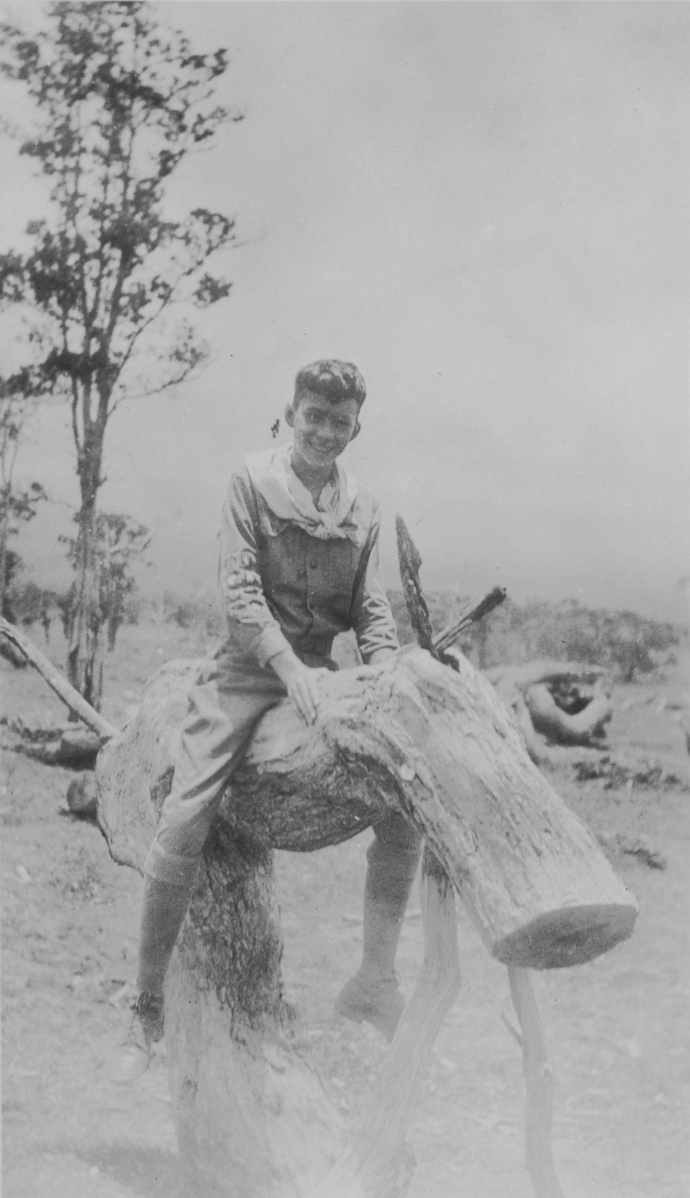
On July 26, 1925, Boy Scout John B. Moffett of Birmingham, Alabama’s Troop 47, climbed atop a bizarre, twisted tree formation in Hawai‘i Volcanoes National Park, flashing a triumphant smile for a camera that would capture the quintessential spirit of early twentieth-century American youth exploration. Traveling across the Pacific as part of an elite delegation of scouts exploring the nation’s newly established and highly remote volcanic parks, Moffett used the petrified, curved natural saddle as an impromptu mount. This striking photograph beautifully captured the stark, alien contrast between a uniform-clad American boy and the raw, dangerous volcanic landscape of Kīlauea, illustrating how the wilderness could be transformed from a site of peril into an interactive classroom.
Behind this candid, playful image lay a highly orchestrated institutional philosophy designed to reshape the character of American youth in the post-frontier era. Founded in the shadow of rapid urbanization and industrialization, the Boy Scouts of America actively used remote national parks like Hawai‘i Volcanoes to rescue young men from what they perceived as the softening, corrupting influences of modern city life. By forcing scouts to navigate rugged lava tubes, camp near active craters, and apply practical woodcraft skills to unfamiliar volcanic terrains, the organization sought to recreate the rugged grit of the old American pioneer frontier. Moffett’s playful pose serves as a powerful visual testament to this mission, demonstrating how early twentieth-century conservation and scouting movements successfully fused imagination, youthful adventure, and raw outdoor exploration to cultivate a new generation of environmentally conscious, resilient citizens.
