
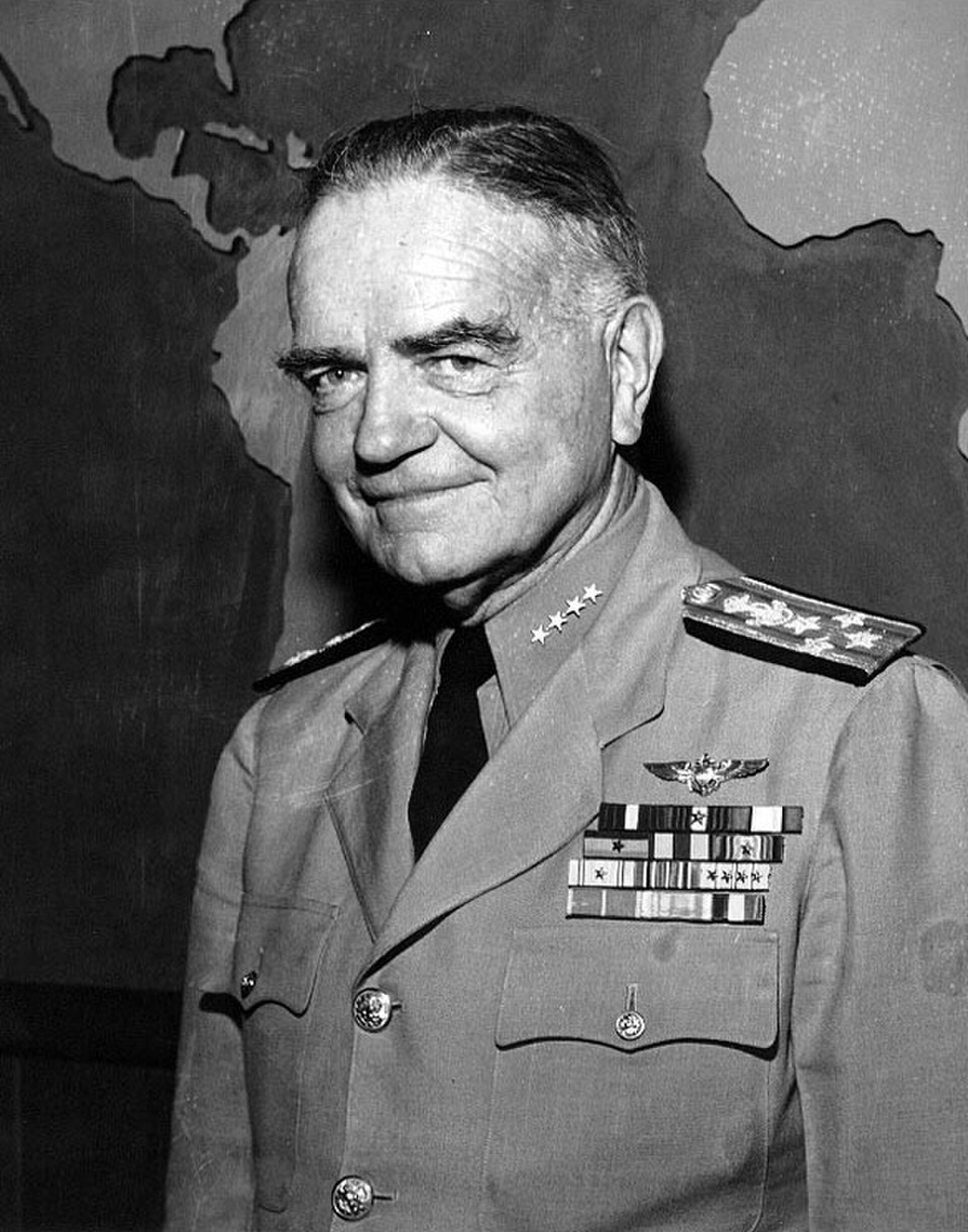
Born on October 30, 1882, in Elizabeth, New Jersey, Admiral William F. “Bull” Halsey Jr. became one of the most recognizable American naval commanders of World War II. His famous fighting motto—“Hit hard, hit fast, hit often”—captured the aggression that defined his public image and approach to command. He brought a determined offensive spirit to the Pacific campaign and later led the powerful Third Fleet in operations against Japanese forces.
Halsey’s wartime career spanned distinct phases: leadership in the South Pacific during the Solomon Islands campaign, followed by command of Third Fleet in 1944. In the latter role, he directed carrier operations supporting the advance toward the Philippines, employing American naval airpower to strike Japanese bases, aircraft, and warships. His achievements reflected both his determination to seize the initiative and the immense resources increasingly available to the U.S. Navy.
That determination also carried serious risks. During the Battle of Leyte Gulf in October 1944, Halsey took his carriers and fast battleships north to attack a Japanese carrier force serving as a decoy. His decision left San Bernardino Strait unguarded, allowing Admiral Takeo Kurita’s powerful Center Force to threaten American forces off Samar. The episode remains central to assessments of Halsey’s judgment, demonstrating how pursuit of an offensive opportunity could jeopardize other essential responsibilities.
His record was further shadowed by Typhoon Cobra in December 1944, when three American destroyers sank and 790 men died across the fleet. The subsequent court of inquiry held Halsey responsible for errors in handling the fleet, while treating those decisions as errors of judgment under wartime stress rather than negligence.
Halsey’s enduring legacy is therefore neither an uncomplicated celebration nor a dismissal of his accomplishments. He was an important leader of the American naval offensive whose fighting spirit helped drive sustained operations across the Pacific. His career also reveals the demanding balance between boldness and restraint: aggression could create opportunities, but effective command required protecting the fleet and the mission as well as striking the enemy.
