
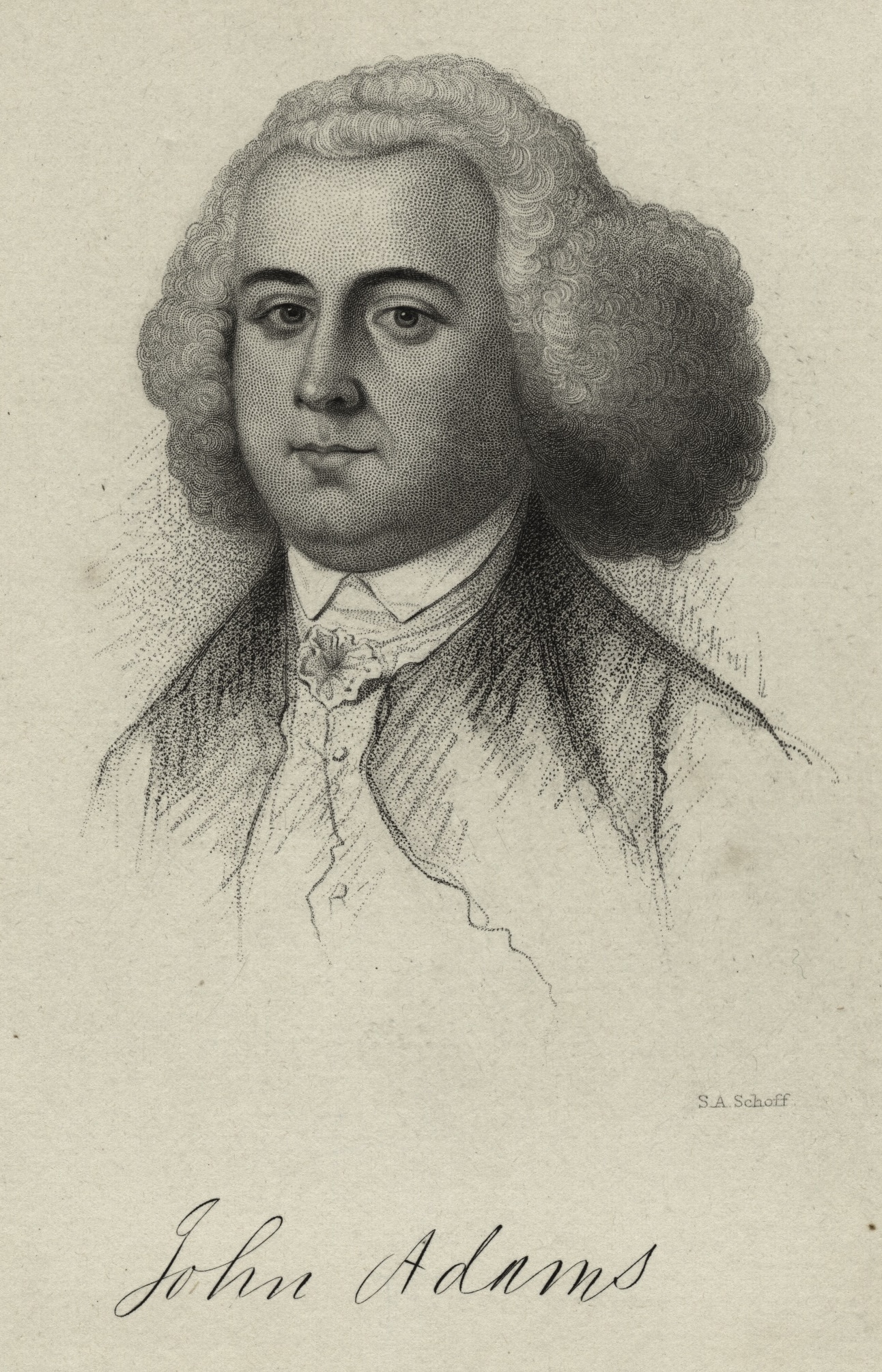
On October 30, 1735, John Adams, the future second president of the United States, was born in Braintree, Massachusetts. Raised in a farming household, he became a lawyer, a forceful advocate for independence, and an influential thinker on the foundations of republican government. As the conflict with Great Britain deepened, Adams understood that the struggle involved more than separation from an empire: it concerned the preservation of rights that, once surrendered, might prove impossible to recover. Writing to Abigail Adams on July 7, 1775, he warned that “Liberty once lost is lost forever.”
Adams’s public career revealed both a principled commitment to justice and the contradictions that tested it. In 1770, he defended British soldiers charged in the Boston Massacre, accepting an unpopular case that demonstrated his belief that even despised defendants deserved a fair trial. Yet as president, he signed the Alien and Sedition Acts of 1798, including legislation that criminalized certain criticism of the federal government. That decision remains a serious blemish on his record, exposing the tension between his defense of liberty and his willingness to restrict political opposition.
His enduring constitutional contribution lay in his insistence that liberty required more than confidence in the virtue of those who governed. Through his political writings and his central role in drafting the Massachusetts Constitution of 1780, Adams championed separated powers, an independent judiciary, and checks against concentrated authority. That constitution helped provide a model for the United States Constitution, although Adams himself was abroad during the Philadelphia convention. His legacy is not one of flawless fidelity to freedom, but of lasting insight into the institutions needed to protect it—and a reminder that even liberty’s defenders must be held accountable to its principles.
