
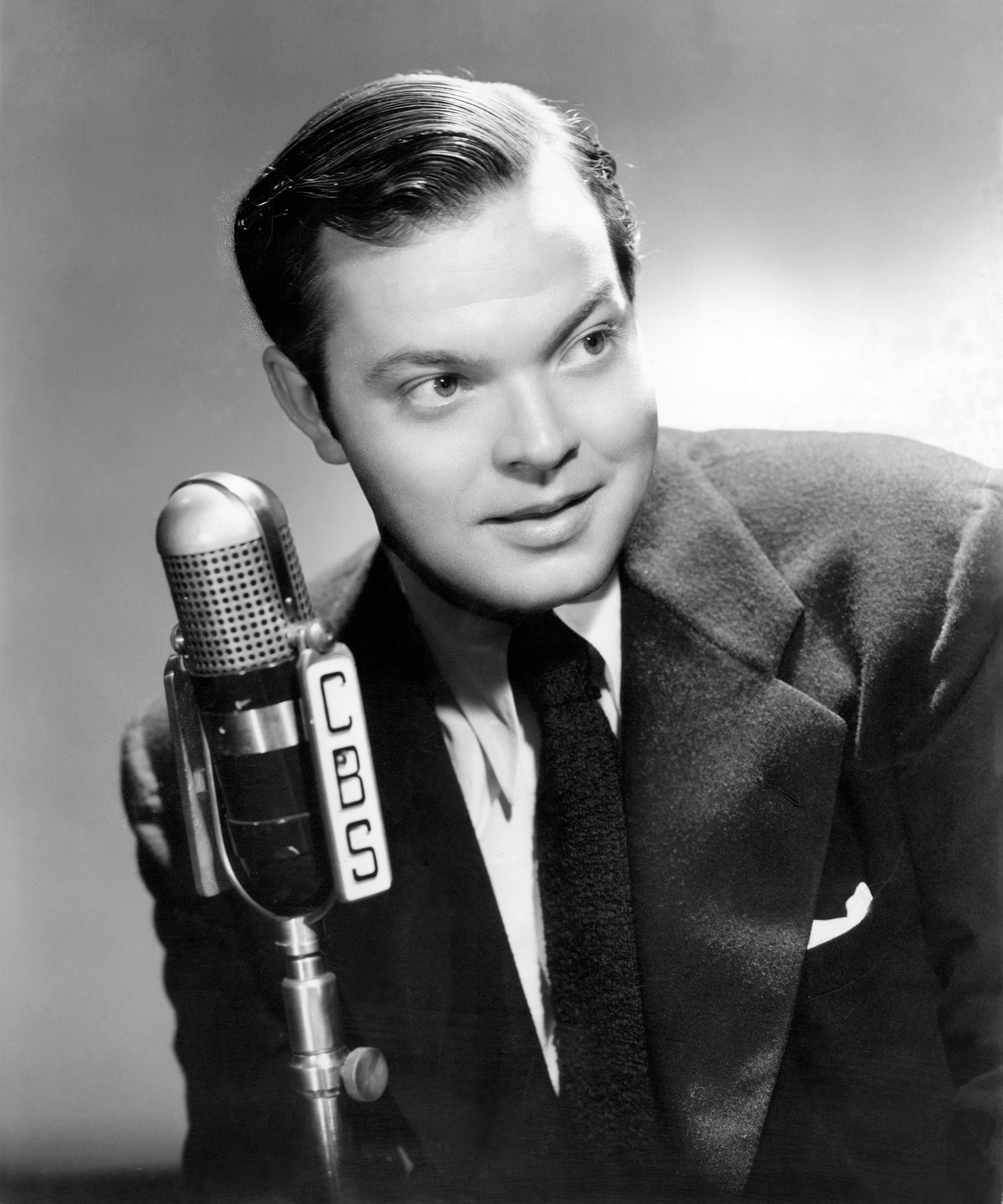
On October 30, 1938, twenty-three-year-old Orson Welles and his Mercury Theatre on the Air broadcast a radio adaptation of H. G. Wells’s The War of the Worlds over the CBS network. Written by Howard Koch, the adaptation relocated the invasion to the United States and presented much of its opening forty minutes as a series of increasingly urgent news bulletins interrupting a dance-music program. Reports of Martians landing in New Jersey and advancing toward New York gave the fictional invasion the sound of a developing emergency. Although the broadcast identified itself as a dramatization, some listeners—particularly those who tuned in late—mistook it for real news.
The performance caused genuine fear and confusion among some listeners. People telephoned police departments, newspapers, and radio stations to check the reports, while some prepared to leave the threatened areas. Newspapers subsequently portrayed the reaction as a national panic, helping establish one of the most enduring stories in broadcasting history. Later investigations, however, have challenged the scale of that panic and emphasized the press’s role in magnifying it. The controversy also brought Welles greater prominence; afterward, the Mercury Theatre secured commercial sponsorship and became The Campbell Playhouse.
The broadcast’s significance lies not simply in its ability to frighten, but in the relationship between media authority and audience expectations. Only a month earlier, the Munich crisis had accustomed Americans to urgent radio reports about the possibility of war in Europe. By reproducing the familiar voices and conventions of emergency journalism, the production made an impossible event sound momentarily credible to some listeners. Its legacy offers a double warning: convincing presentation can lend fiction the authority of news, while sensational reporting can turn a limited episode of confusion into a lasting legend of mass hysteria.
