
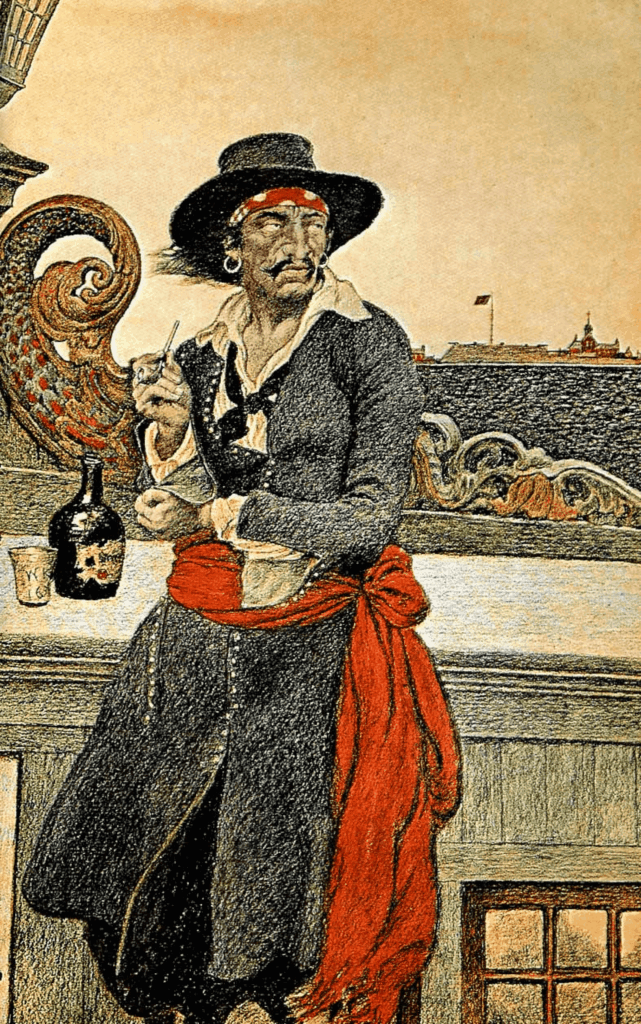
On May 23, 1701, the Scottish‑born privateer Captain William Kidd was hanged at Execution Dock in London, an event that sent a shudder through the Atlantic world and the early American colonies. His capture and trial were staged as a public demonstration of the Crown’s determination to crush piracy and assert unambiguous authority over the oceanic trade routes that bound England to its colonies.
The deeper, grittier truth is that Kidd’s career was woven into the highest levels of early American political and financial power. Far from a skull‑and‑crossbones marauder, Kidd was a wealthy, respected New York resident, legally commissioned as a privateer by a syndicate of influential English nobles and the Governor of New York and Massachusetts. When his mission to hunt pirates collapsed after he seized an Armenian merchant ship carrying a French pass that should have protected it, his American and British patrons abandoned him to save their own reputations — even suppressing the very French documents that might have cleared him.
His execution was as macabre as it was symbolic. The rope snapped on the first attempt, forcing the hangman to try again. Afterward, Kidd’s body was tarred, locked in iron chains, and suspended over the Thames for three years — a floating warning to every colonial merchant ship that passed beneath it.