
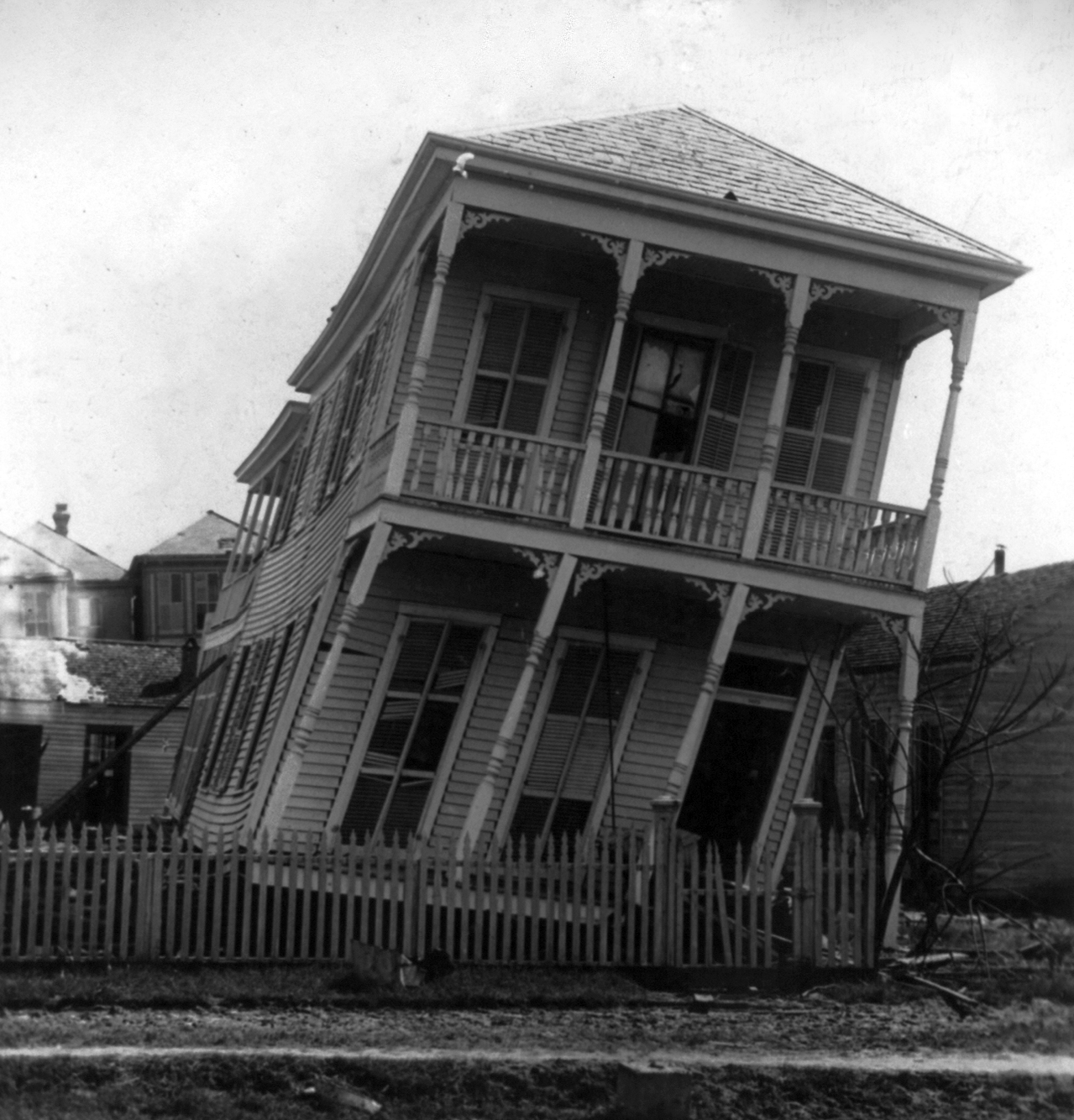
At approximately 8:00 p.m. on September 8, 1900, a catastrophic Category 4 hurricane struck Galveston Island, Texas, about 50 miles southeast of Houston. With estimated maximum sustained winds of roughly 145 miles per hour and a storm surge that may have reached 15 feet, the hurricane inundated much of the low-lying island city. The Galveston Hurricane of 1900 remains the deadliest natural disaster in United States history.
Galveston’s vulnerability was worsened by its low elevation, the absence of a protective seawall, and the limited forecasting and warning systems available at the turn of the century. Local Weather Bureau official Isaac Cline recognized signs of an unusually dangerous storm, including an exceptional Gulf swell, but the full threat was not communicated effectively enough to prompt a large-scale evacuation. Many of the city’s approximately 38,000 residents remained on the island as the storm intensified.
When the surge reached its peak, waves and wind destroyed or severely damaged more than 3,600 homes and other buildings. Houses were torn from their foundations and swept into enormous fields of wreckage, creating debris barriers that intensified the destruction across the city.
The human toll was staggering. Death estimates most commonly range from 6,000 to 8,000 people, although some contemporary accounts placed the number considerably higher. In the aftermath, Galveston faced an immense public-health and recovery crisis: bodies had to be recovered and buried or disposed of at sea, infrastructure had to be rebuilt, and survivors needed food, shelter, and medical care.
The disaster also transformed Galveston’s civic structure and physical landscape. In 1901, the city adopted a commission form of government, an administrative model that later influenced municipal reform elsewhere in the United States. To reduce the risk of another catastrophe, engineers constructed a seawall initially about 17 feet high and undertook an enormous grade-raising project, elevating large portions of the island with dredged sand. Those projects permanently reshaped Galveston and helped protect it from later storms.
Image: A house twisted by the destructive force of the 1900 Galveston Hurricane. Via Wikimedia Commons; public domain in the United States.
