
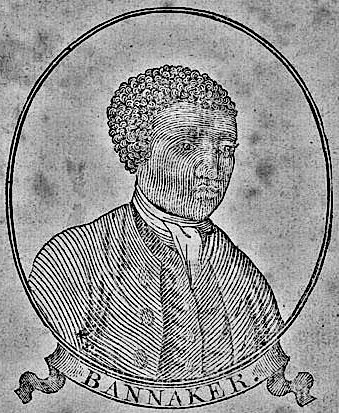
Benjamin Banneker was born on November 9, 1731, in Baltimore County, Maryland. A free African American farmer, largely self-taught mathematician, and astronomer, he built a working wooden clock and developed the astronomical skills that would support his published almanacs. His achievements reflected both his determination and the encouragement of neighbors such as George Ellicott, who lent him books and scientific instruments.
On August 19, 1791, Banneker wrote a remarkable letter to Secretary of State Thomas Jefferson. He enclosed a handwritten manuscript of his forthcoming 1792 almanac, placing evidence of his intellectual accomplishments before a statesman whose Notes on the State of Virginia had questioned Black intellectual equality.
Banneker turned the language of the Declaration of Independence back upon its principal author. He reminded Jefferson of the struggle against British oppression and challenged him to recognize the injustice of keeping others enslaved while professing a commitment to liberty. Appealing to their shared humanity, Banneker wrote that “one universal Father hath given being to us all” and urged Jefferson to help eradicate the “train of absurd and false ideas and opinions” directed against Black people.
Jefferson replied on August 30, thanking Banneker and expressing a desire to see evidence that nature had given Black people talents equal to those of other people. He also sent the almanac to the Marquis de Condorcet, secretary of the French Academy of Sciences, describing Banneker as “a very respectable Mathematician.”
The exchange remains a meaningful moment in the early republic’s debate over liberty and equality. Banneker brought scientific accomplishment and moral conviction to his appeal, asking Jefferson to extend the principles of the Declaration of Independence to all Americans. His letter stands as a thoughtful and courageous assertion of shared humanity—and a reminder of the distance between the nation’s founding ideals and the realities of slavery.
