
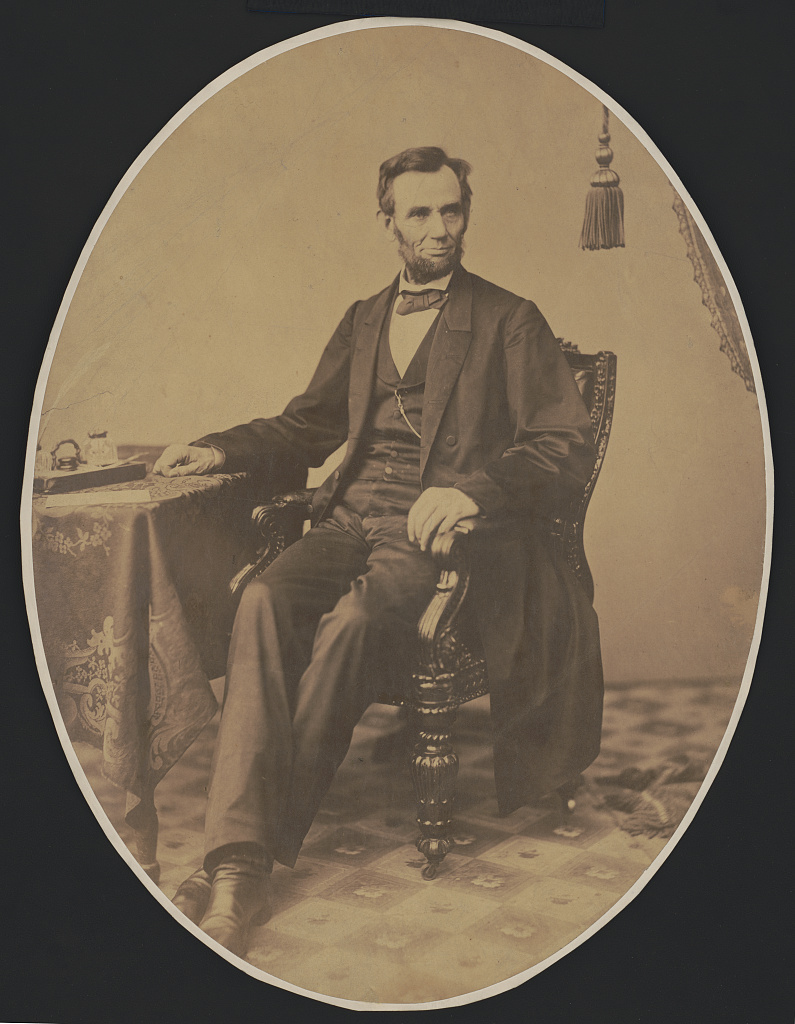
On Sunday, November 8, 1863, Abraham Lincoln sat for photographer Alexander Gardner in Washington, D.C. Eleven days later, he would deliver the Gettysburg Address. Exactly one year after this portrait was taken, on November 8, 1864, American voters would return him to the presidency for a second term. The shared date connects this image of the wartime president with two defining events: his expression of the Union’s purpose at Gettysburg and the election that renewed his mandate to pursue it.
At Gettysburg on November 19, 1863, Lincoln framed the Civil War as a test of whether a nation conceived in liberty and dedicated to equality could endure. His call for a “new birth of freedom” linked the Union’s survival to a transformation of the nation itself. By the following autumn, those principles had concrete political stakes. Lincoln’s National Union platform called for defeating the rebellion and adopting a constitutional amendment to abolish slavery.
Reelection was far from assured. War weariness and uncertainty about military progress threatened Lincoln’s prospects, while Democratic nominee George B. McClellan offered voters an alternative to his leadership. Union victories, particularly the capture of Atlanta in September 1864, helped restore Northern confidence. Soldiers also contributed to Lincoln’s success: among the military absentee votes separately recorded, approximately 78 percent supported him. He ultimately defeated McClellan by 212 electoral votes to 21.
Gardner’s portrait captures Lincoln before either the Gettysburg Address or that electoral victory had occurred. Viewed alongside the events of the following year, it becomes more than a presidential likeness. It connects a moment of wartime uncertainty with the words Lincoln would soon deliver—and with the public mandate he later received to continue pursuing Union victory and the abolition of slavery.
