
A little more than a week after the British occupied Philadelphia, American forces under General George Washington launched a daring surprise attack on the British outpost at Germantown, Pennsylvania, on October 4, 1777. Still reeling from their recent defeat at the Battle of Brandywine, Washington devised a complex four-column offensive intended to envelop the British lines at dawn under cover of dense autumn fog.
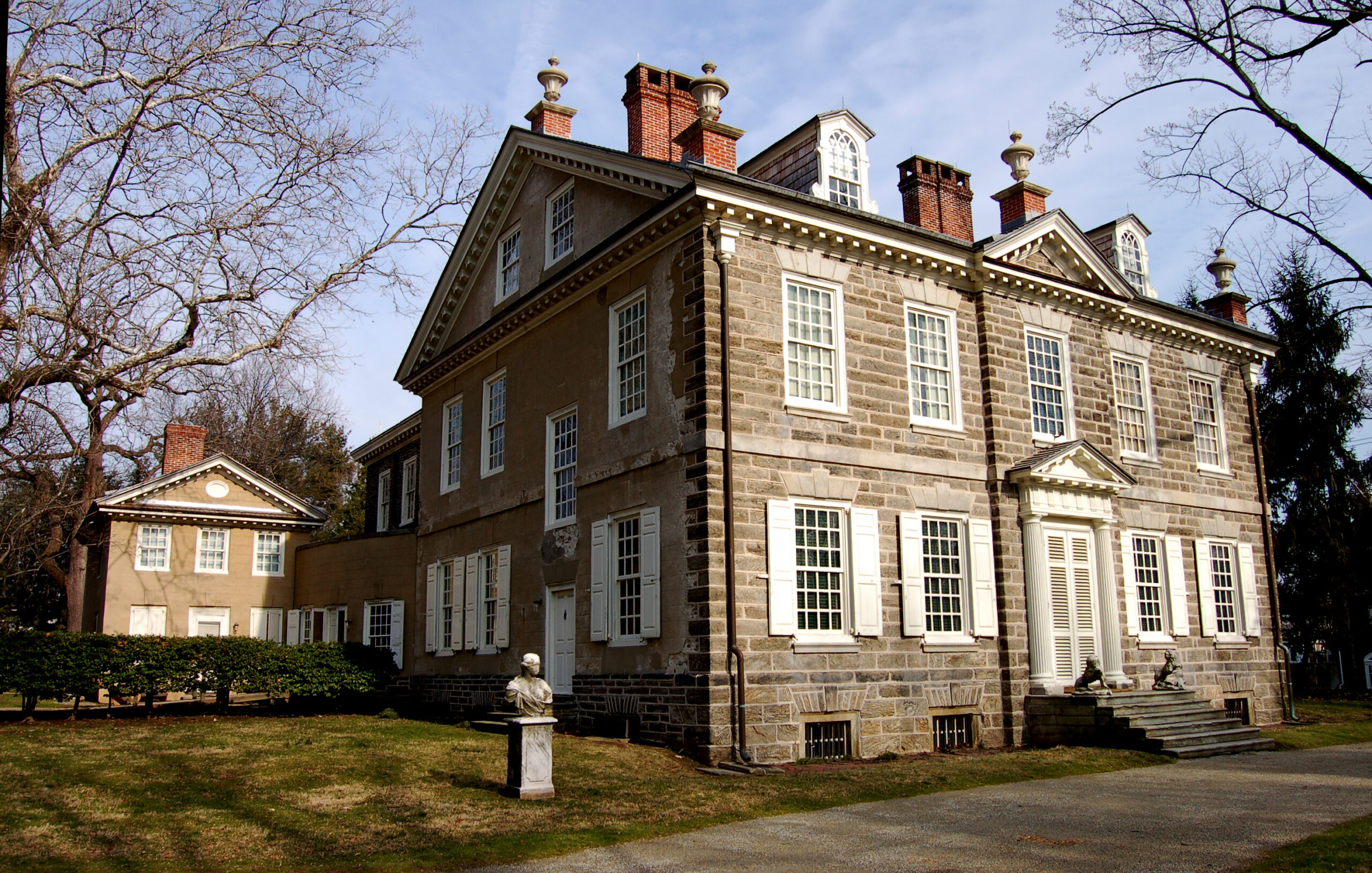
The American advance initially drove British troops back. But the momentum stalled when Lieutenant Colonel Thomas Musgrave and roughly 100 to 120 soldiers of the British 40th Regiment of Foot took refuge in Cliveden, the massive stone country house of Pennsylvania Chief Justice Benjamin Chew. Rather than bypass the improvised fortress, Washington’s forces halted to surround it. American infantry launched repeated assaults, while artillery under Henry Knox bombarded the building, but Cliveden’s thick stone walls held. About 57 American soldiers were killed in the fighting around the house, which the British defenders never surrendered.
The struggle for Chew House contributed to the breakdown of Washington’s carefully coordinated attack. Dense fog, confused movements among the American columns, and the stubborn British defense gave General William Howe and Lieutenant General Charles Cornwallis time to regroup and counterattack. During the subsequent American retreat, Lieutenant John Marshall—later Chief Justice of the United States—was wounded.
Although Germantown ended in defeat for the Continental Army, Washington’s audacious offensive showed that the Americans could still threaten British forces in the field. The Battle of Germantown—and especially the defense of Chew House—became one of the Revolution’s most dramatic examples of how a small, well-defended position could alter the course of a larger battle.
Image credit: Chew House or Cliveden in Germantown, Pennsylvania, via Shutterstock
