On October 4, 1862, President Abraham Lincoln stopped in downtown Frederick, Maryland, while returning to Washington from his consequential visit to the Army of the Potomac after Antietam. Arriving by carriage, the president undertook a personal wartime duty: he visited Union Brigadier General George Lucas Hartsuff, who was recovering at the home of Ellen Ramsey on Record Street after being severely wounded at Antietam. Frederick had itself been transformed by the Maryland Campaign, its buildings and homes pressed into service as hospitals for the many wounded from South Mountain and Antietam.
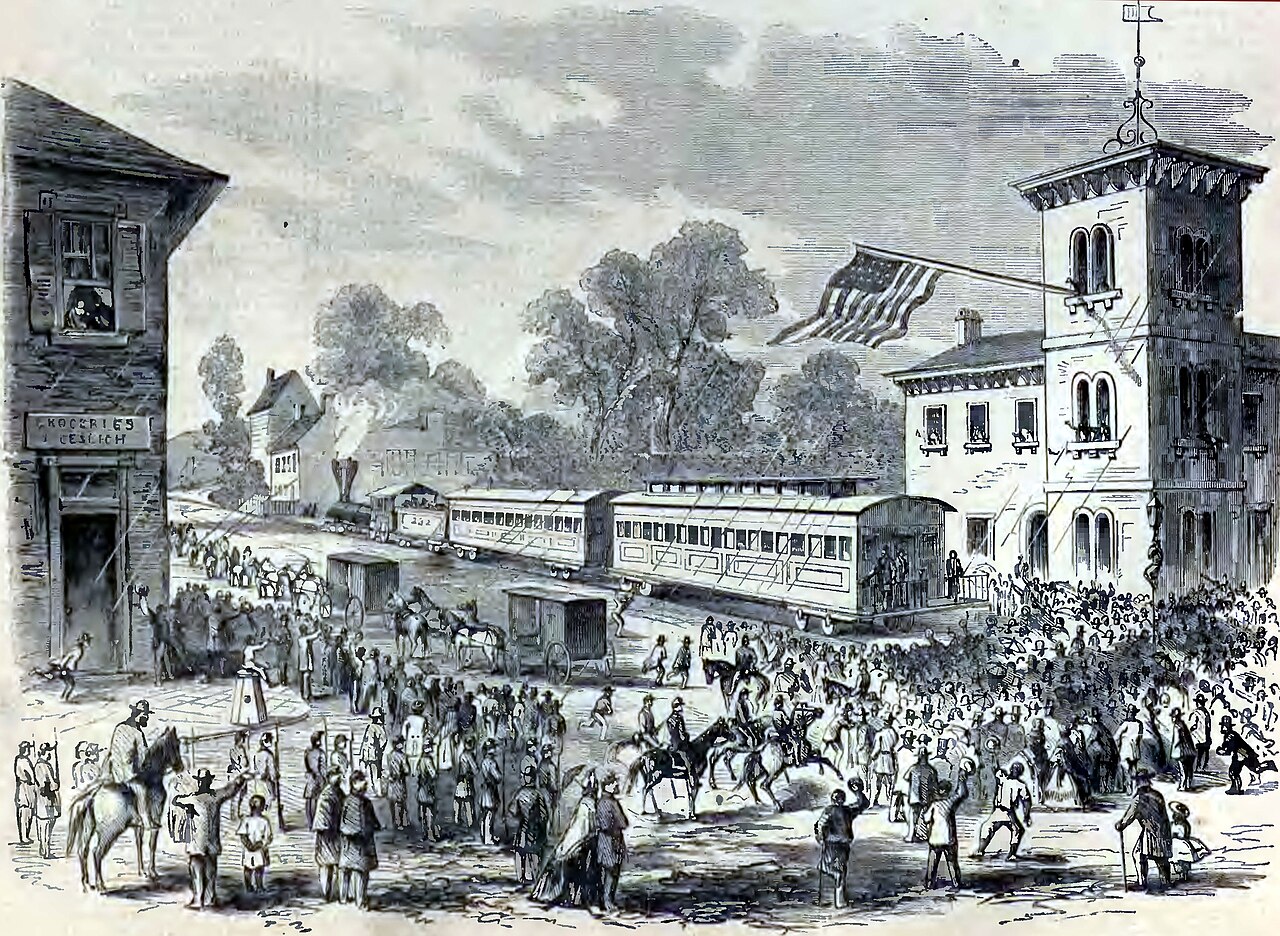
When Lincoln emerged from the Ramsey home, an enthusiastic crowd of residents and soldiers called for him to speak. He offered a short response but declined a formal address, explaining that “in my present position it is hardly proper for me to make speeches.” His carriage then traveled through downtown Frederick to the Baltimore & Ohio Railroad station at the intersection of South Market and East All Saints streets, where another crowd had gathered for his departure.
From the rear platform of his railcar, Lincoln again resisted a lengthy political speech. Instead, he thanked Union soldiers for “the good service they have rendered,” the hardships they had endured, and the blood they had shed for “this dear Union of ours.” He also thanked “the good citizens of Frederick” and “all the good men, women, and children throughout this land” for their devotion to the Union cause. His closing words linked wartime sacrifice to the enduring promise of a united country and the institutions “bequeathed us by Washington and his compeers.”
Though brief and impromptu, Lincoln’s remarks were more than a ceremonial farewell. Delivered less than two weeks after he issued the Preliminary Emancipation Proclamation, they joined the immediate human cost of the Maryland Campaign—wounded soldiers, hospital-filled streets, and anxious civilians—to his larger appeal for national preservation.
Image credit: “The President’s Visit to the Army of the Potomac—Arrival at the Station at Frederick,” historic illustration/documentation via Wikimedia Commons, public domain.