
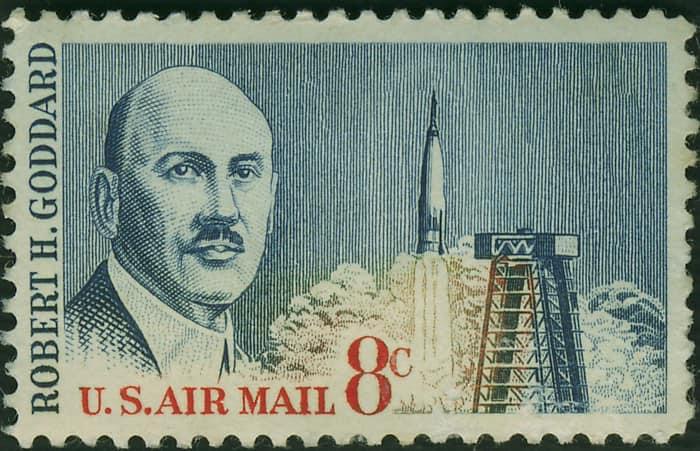
On July 14, 1914, visionary American physicist and engineer Robert H. Goddard received pioneering patent number 1,103,503 for a revolutionary “Rocket Apparatus.” This critical legal filing laid the essential multi-stage framework for modern spaceflight, setting the stage for Goddard to launch the world’s very first successful liquid-fueled rocket less than twelve years later.
The heartbreaking hidden layer to Goddard’s early patents was the brutal public ridicule and professional isolation he faced for his scientific theories. In 1920, The New York Times published a scathing, mocking editorial claiming that Goddard lacked the basic knowledge of a high school student because he believed a rocket could function in the vacuum of space. The relentless public shaming forced Goddard to withdraw from the scientific community, conducting his monumental, world-changing rocket experiments in absolute secrecy in the remote deserts of New Mexico.
Image via Wikimedia Commons, public domain
