
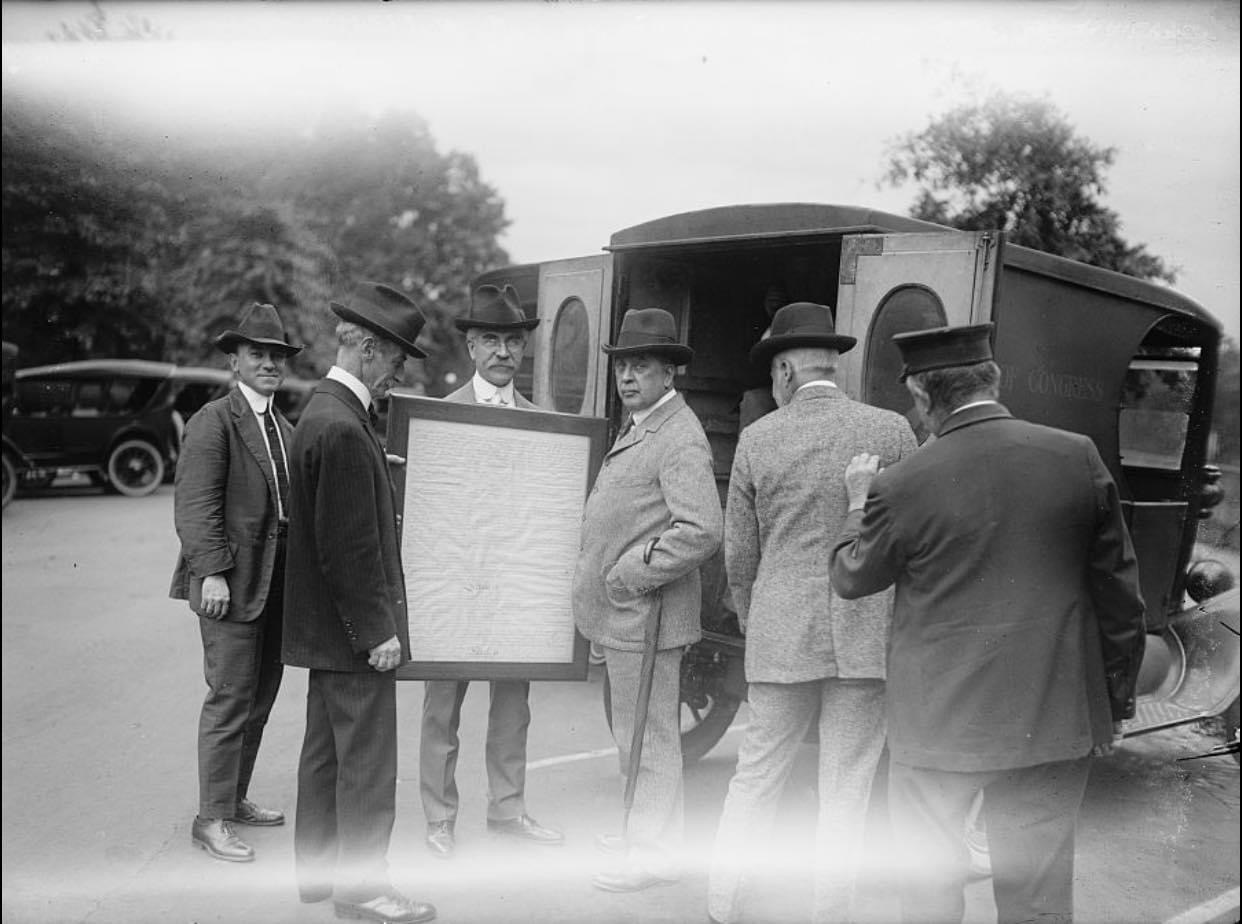
The physical preservation of America’s founding documents entered a new phase on September 30, 1921, when the original Declaration of Independence and United States Constitution were formally transferred from the Department of State to the Library of Congress. The move followed an executive order signed by President Warren G. Harding the previous day, directing that the fragile parchments be placed in the Library’s custody for safekeeping and public exhibition.
Since the founding era, the documents had endured a nomadic and often hazardous existence. They had been exposed to changing temperatures, candlelight, routine handling in government offices, and wartime danger—including evacuation from Washington during the British burning of the city in 1814. Long display of the Declaration in bright light had also contributed significantly to the fading of its ink, intensifying concerns about its preservation.
On September 30, Librarian of Congress Herbert Putnam personally received the documents from the State Department. He transported them to the Library in its Model T mail truck and placed them in the safe in his office while arrangements were made for their exhibition. The transfer reflected recommendations that the Library’s preservation expertise and fireproof facilities offered a safer setting for the nation’s most consequential original records.
The Declaration and Constitution remained at the Library until December 1952, when they were transferred to the National Archives to join the Bill of Rights. At that time, they were protected in helium-filled cases; their current airtight encasements use inert argon gas and modern environmental monitoring. The 1921 transfer was therefore an important early milestone in the long effort to preserve—and make accessible—the nation’s Charters of Freedom.
Image credit: “Removal of the U.S. Constitution from the State Department,” September 30, 1921, Library of Congress. No known restrictions.
