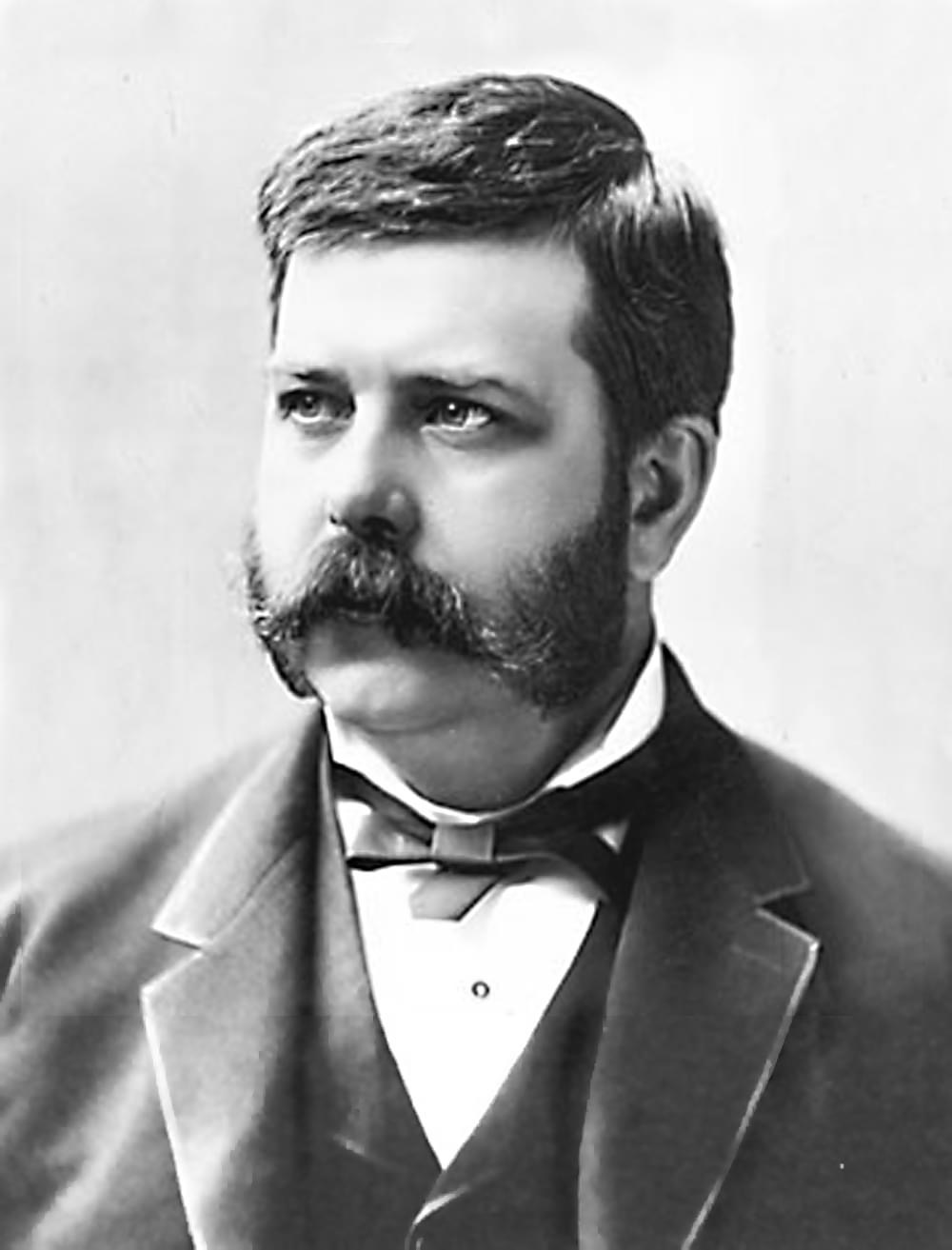
Born on October 6, 1846, in Central Bridge, New York, American inventor and industrialist George Westinghouse became one of the most consequential technological pioneers of the industrial age. After serving in both the Union cavalry and the U.S. Navy during the Civil War, the young veteran turned his engineering talent toward one of the most dangerous problems facing the rapidly expanding railroad industry: stopping trains safely and reliably.
Westinghouse’s defining breakthrough came in 1869, when he patented an air-brake system for railroads. Before its development, trains depended on brakemen who moved across the tops of railcars to operate hand brakes individually—dangerous work that made braking slow, uneven, and unreliable. Westinghouse’s system used compressed air controlled from the locomotive, allowing the engineer to apply brakes throughout the train in a coordinated manner.
He continued refining the invention, eventually developing the automatic air brake. By placing air reservoirs and control valves on individual cars, the improved system could apply the brakes if a train separated or an air line failed, creating an essential fail-safe safeguard. The technology transformed railroad safety, helped make faster and heavier trains more practical, and led to the establishment of the Westinghouse Air Brake Company in 1869.
Westinghouse later became a leading advocate for alternating-current electricity. After obtaining rights to Nikola Tesla’s polyphase AC patents in 1888, he helped advance the technology that became central to modern electric-power transmission and distribution.
On the anniversary of his birth, Westinghouse is remembered as a visionary inventor and industrial leader whose work joined technological progress to a lasting concern for public safety.