
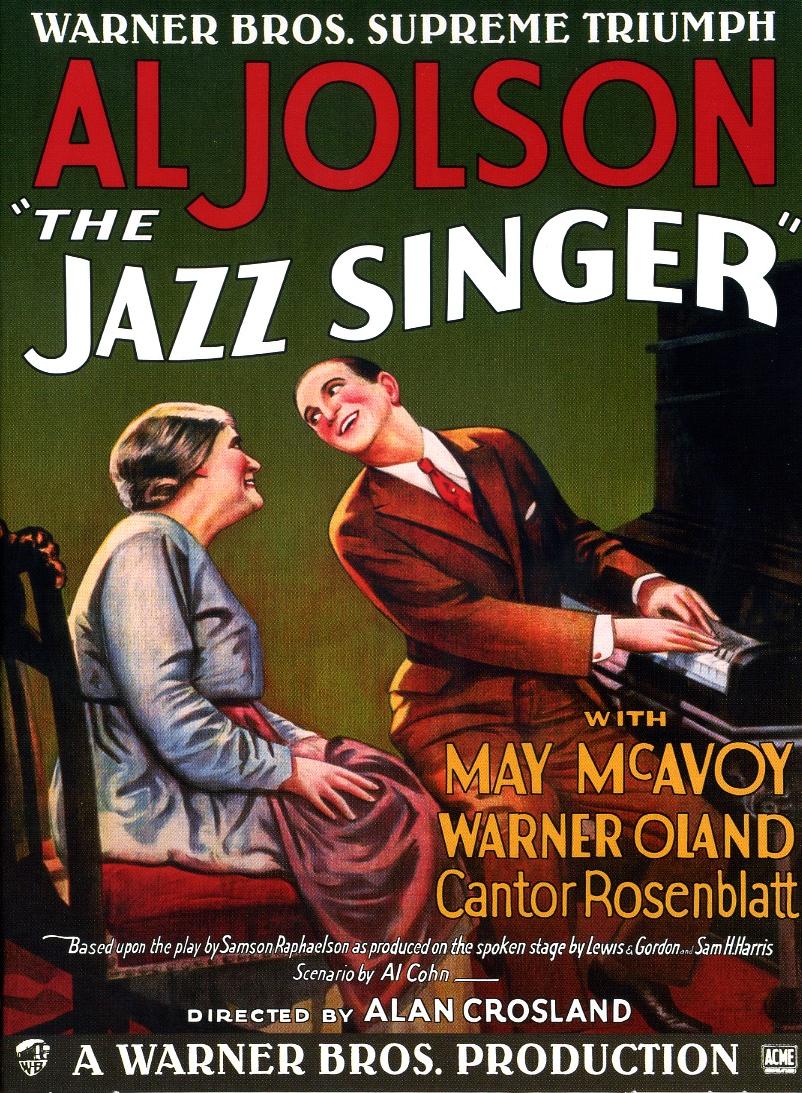
On October 6, 1927, Warner Bros. premiered The Jazz Singer at its Warner Theatre in New York City. Starring vaudeville superstar Al Jolson, the film adapted the popular Broadway play about a young man divided between his family’s religious traditions and his ambition to become a popular singer.
Although The Jazz Singer was still largely a silent film—using intertitles for most dialogue—it featured synchronized musical performances and several passages of recorded speech through Warner Bros.’ Vitaphone sound-on-disc system. It was not the first film to use synchronized sound or spoken dialogue, but it became the breakthrough feature that convinced audiences and studios that sound films could succeed on a major commercial scale.
The film’s most famous sequence occurs after Jolson performs “Dirty Hands, Dirty Face,” when he addresses the audience with the ad-libbed line: “Wait a minute, wait a minute, you ain’t heard nothin’ yet!” He then launches into “Toot, Toot, Tootsie.” That brief spoken exchange, along with performances such as “My Mammy,” gave moviegoers an unforgettable demonstration of a screen performer who could not only be seen, but heard.
Alongside its technological legacy, The Jazz Singer remains deeply controversial for Jolson’s extensive use of blackface, a theatrical convention rooted in nineteenth-century minstrel caricatures. While some contemporary 1927 audiences viewed it through the lens of traditional stage performance or as a thematic expression of immigrant assimilation, modern historians examine the film as a complex artifact—both a massive engineering milestone and a stark reflection of the era’s racial attitudes.
The film’s enormous success accelerated Hollywood’s already developing move from silent films to sound. Studios rushed to make sound pictures, and theater owners faced expensive conversions to accommodate the new technology. Within the next few years, talking pictures had become the dominant form of commercial filmmaking, leaving The Jazz Singer as the watershed success that helped make the “talkie” the new standard.