
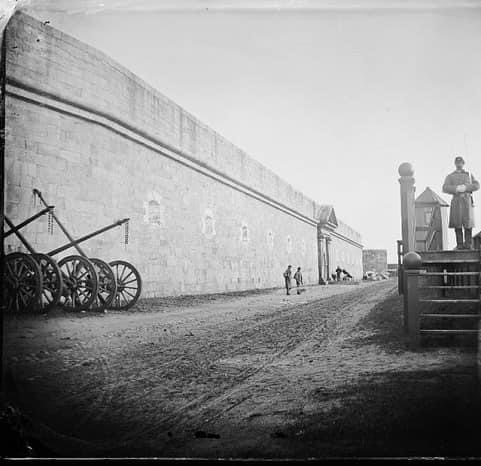
On June 11, 1825, a brilliant French military engineer named Simon Bernard laid the official cornerstone of Fort Hamilton in Brooklyn, New York. Designed to fortify the vital Narrows shipping channel, the masonry fort was constructed to protect New York Harbor from hostile foreign navies. Decades later, the post served as a proving ground for legendary American military figures; Captain Robert E. Lee was assigned as the fort’s post engineer in 1842 to repair its structural integrity, and Thomas Stonewall Jackson was stationed there immediately following his service in the Mexican-American War.
The engineering of Fort Hamilton was a direct response to the glaring coastal vulnerabilities exposed during the War of 1812, when British fleets easily bypassed older defenses to attack American shores. Bernard, a former aide to Napoleon Bonaparte who brought advanced European fortification tactics to the United States, engineered a massive granite stronghold capable of withstanding heavy naval bombardments. The fort remains a historic milestone in coastal defense, evolving from a standard nineteenth-century fortress into a vital, active military installation that protected America through both World Wars.
