
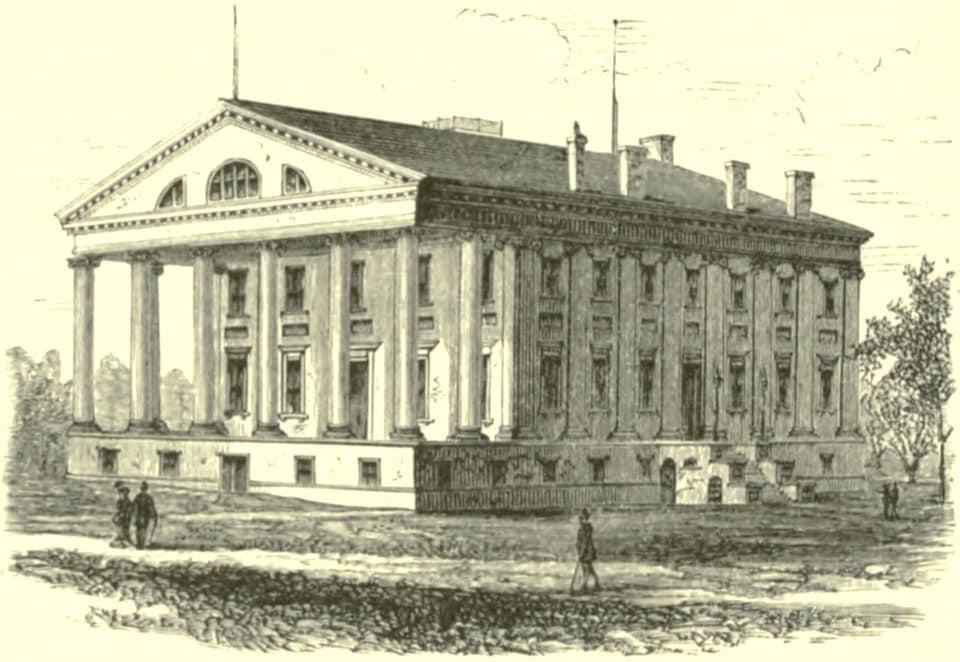
On June 13, 1786, Thomas Jefferson, serving as U.S. Minister to France, shipped a meticulously crafted architectural model from Paris to Richmond. Created with the French classicist Charles‑Louis Clérisseau and inspired directly by the Maison Carrée at Nîmes, the model provided the physical blueprint for what would become the Virginia State Capitol.
Jefferson’s choice was radical. Rejecting the Georgian and Palladian forms associated with Britain, he turned instead to the architecture of ancient republicanism. A public building, he believed, should teach civic virtue through its very form—symmetry, clarity, restraint, and the moral authority of antiquity. The completed Capitol, rising on Shockoe Hill, became the first American public building modeled on a classical temple, a deliberate architectural declaration that the new republic would draw its identity from Rome, not from the monarchy it had cast off.
Jefferson’s temple‑form Capitol did more than house a legislature. It set the aesthetic vocabulary for American government architecture—from courthouses to statehouses to the early federal buildings in Washington—establishing a visual language of democracy that endures to this day.
