
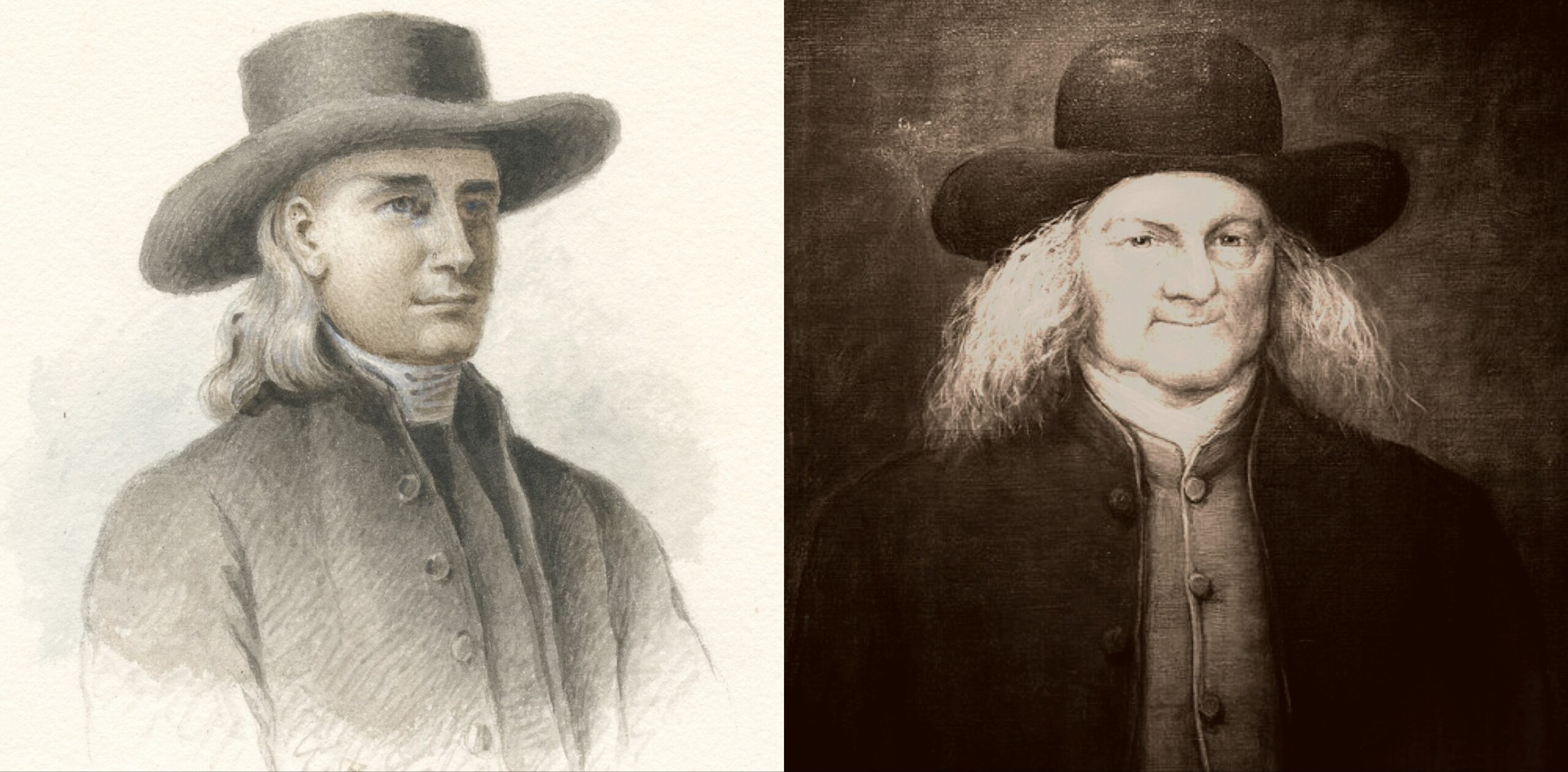
On June 13, 1774, the Rhode Island General Assembly took a bold moral stand by banning the importation of enslaved people into the colony. This historic legislation was driven by a powerful partnership between veteran statesman Stephen Hopkins (left), who introduced the bill to the assembly, and wealthy Providence merchant turned Quaker activist Moses Brown (right), who mobilized the vital grassroots pressure to demand reform. Prompted by radical anti-slavery sermons delivered in Newport by Reverend Samuel Hopkins, these leaders argued that colonists could not rightfully demand liberty from British imperial tyranny while simultaneously tolerating the forced transport of human beings.
The resulting statute declared that any enslaved person brought into Rhode Island for sale by a trader would be immediately and permanently freed, with Governor Joseph Wanton presiding over the legislative session at the Newport Colony House to officially pass it into law. Though the act contained significant loopholes—allowing existing slaveholders to retain the people they held in bondage and failing to stop Rhode Island merchants from participating in the trade elsewhere—it successfully made Rhode Island the first British colony in North America to outlaw the slave trade. The June 13 act stands as an early milestone in America’s long, uneven march toward abolition, forged by a rare alignment of political leadership and a changing moral conscience.
