
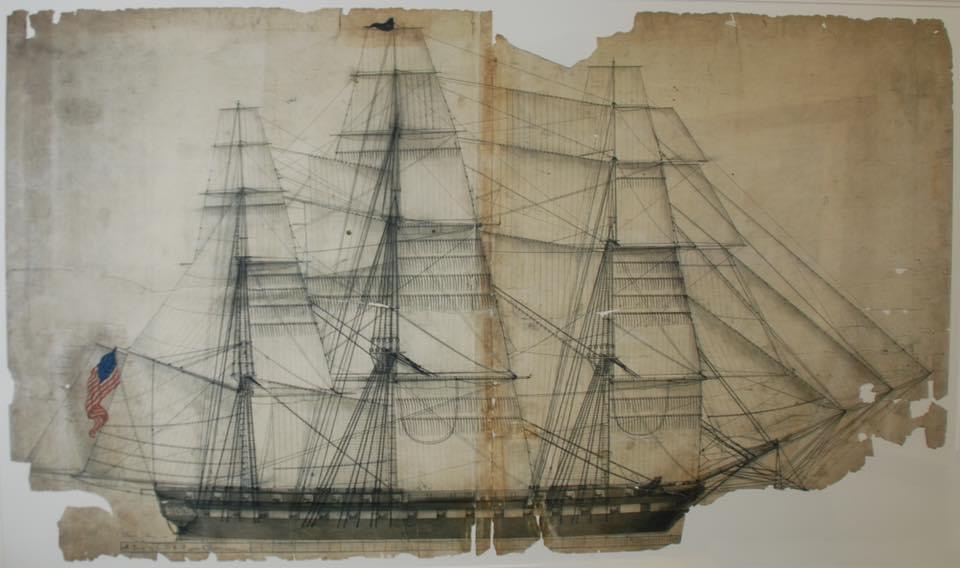
On October 21, 1797, USS Constitution slid into Boston Harbor from Edmund Hartt’s shipyard, succeeding on her third launch attempt. Designed by naval architect Joshua Humphreys, the frigate became one of the young republic’s most enduring expressions of maritime ambition.
Her construction brought together skilled craftsmanship and materials drawn from across the country. Southern live oak formed the closely spaced frames, while white oak planking enclosed them inside and out, creating a hull more than 22 inches thick at the waterline. Paul Revere supplied copper and brass fittings, including rudder chains, as well as the ship’s bell. These details reveal the material strength and industrial effort behind the celebrated warship.
That strength became legendary during the War of 1812. On August 19, 1812, Constitution defeated HMS Guerriere, earning the nickname “Old Ironsides” when British cannonballs appeared to rebound from her stout wooden hull. Further victories against British warships helped establish her place in American naval history.
Today, Constitution remains the world’s oldest commissioned warship afloat. Berthed at Boston’s Charlestown Navy Yard, she endures as a tangible connection to the early United States Navy and the shipbuilding skills that helped sustain it.
Photo Caption:
The Sail Plan of Sovereignty — USS Constitution
A sail plan depicts the rig of USS Constitution, the frigate launched in Boston Harbor on October 21, 1797. Her closely spaced live oak frames and thick white oak planking later helped earn her the nickname “Old Ironsides” during the 1812 battle with HMS Guerriere.
