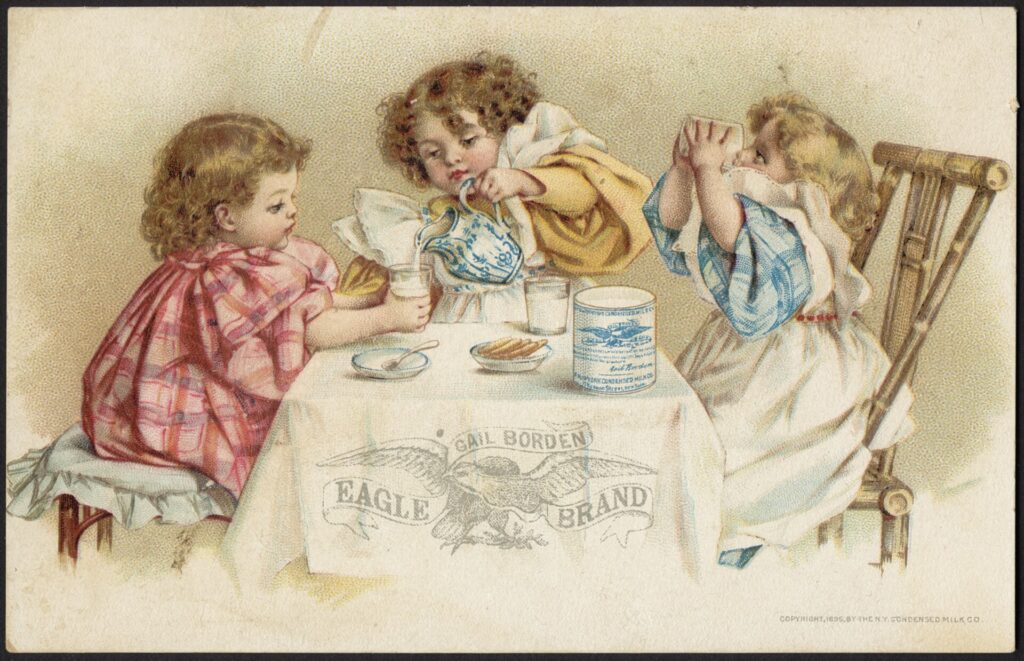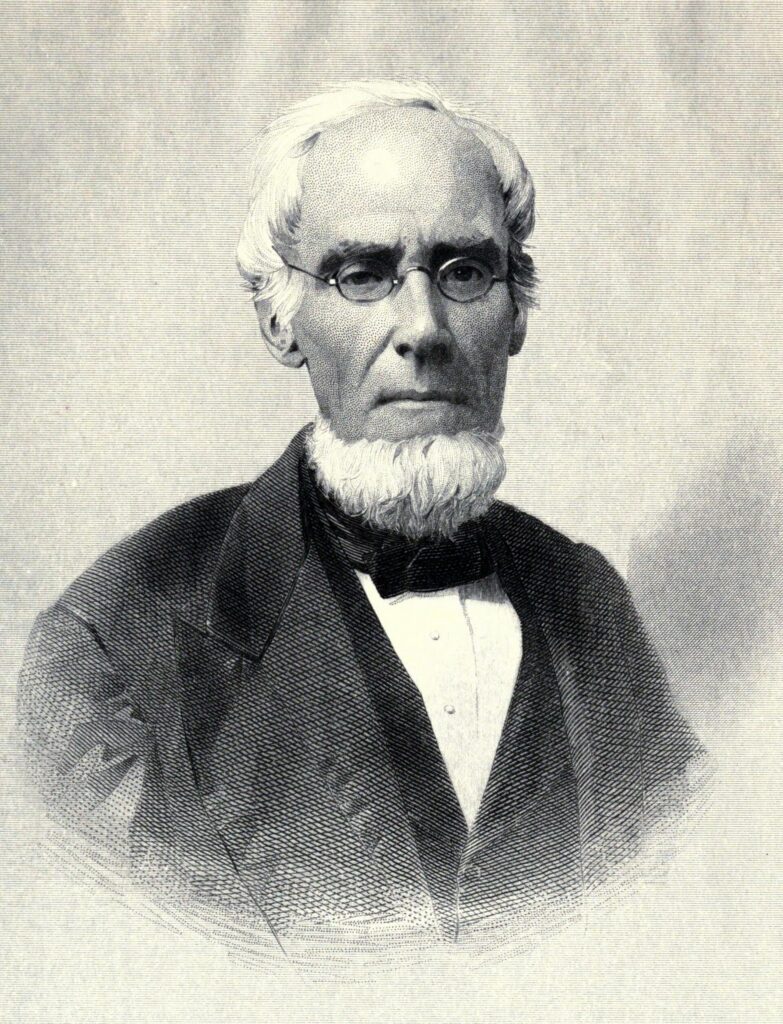
November 9, 1801, marks the birth of Gail Borden Jr. in Norwich, New York. Before becoming known for condensed milk, Borden worked as a surveyor in Texas, helped lay out Houston and Galveston, and co-founded the Telegraph and Texas Register. His interest in food preservation produced an unusual early invention: a biscuit made from dehydrated meat and flour. It earned recognition at London’s Great Exhibition in 1851 but failed to achieve lasting commercial success.
According to a frequently repeated account, Borden’s concern with preserving milk deepened during his return voyage from England in 1851, when several children died after the ship’s milk supply became unsafe or unavailable. In 1853, he experimented with a vacuum pan used by the Shakers at Mount Lebanon, New York. By reducing pressure, the equipment allowed liquids to boil at lower temperatures, offering a way to concentrate milk without scorching it. After several years of experimentation and negotiations with patent officials, Borden received his American patent on August 19, 1856.
The Civil War transformed the commercial prospects of Borden’s condensed milk. Army demand for portable, durable provisions expanded sales and helped establish the business. His achievement joined food preservation to industrial production and military supply: milk could be concentrated, packaged, and transported for use far from its source. The contrast with his meat biscuit was striking. An inventor who had struggled to find a market for one preserved food found an enormous wartime market for another.