
In the early hours of November 9, 1780, a British force under Major James Wemyss attacked Thomas Sumter’s Patriot militia camp at Fishdam Ford on South Carolina’s Broad River. Wemyss hoped to surprise the camp and capture its commander. Instead, the attack encountered prepared defenders, and Wemyss was wounded and taken prisoner. What began as an attempt to destroy Sumter’s force ended in a British withdrawal.
The campfires became a liability for the attackers. Patriot officers had taken precautions against a night assault, including orders for men to remain close to their weapons. As British troops entered the camp, the fires made them visible to Americans firing from the surrounding woods and darkness. Accounts differ over the precise sequence of movements, but the contrast between exposed attackers and concealed defenders helped frustrate the attempted surprise.
Sumter’s own experience complicates any picture of a perfectly controlled victory. Surprised in his tent, he escaped and sheltered beneath a bank of the Broad River while the fighting unfolded. His force nevertheless repelled the attack and captured its wounded commander. Fishdam Ford illustrates how preparations by subordinate officers, visibility, and confusion could shape a night battle—and how a commander’s intended surprise could turn against his own men.
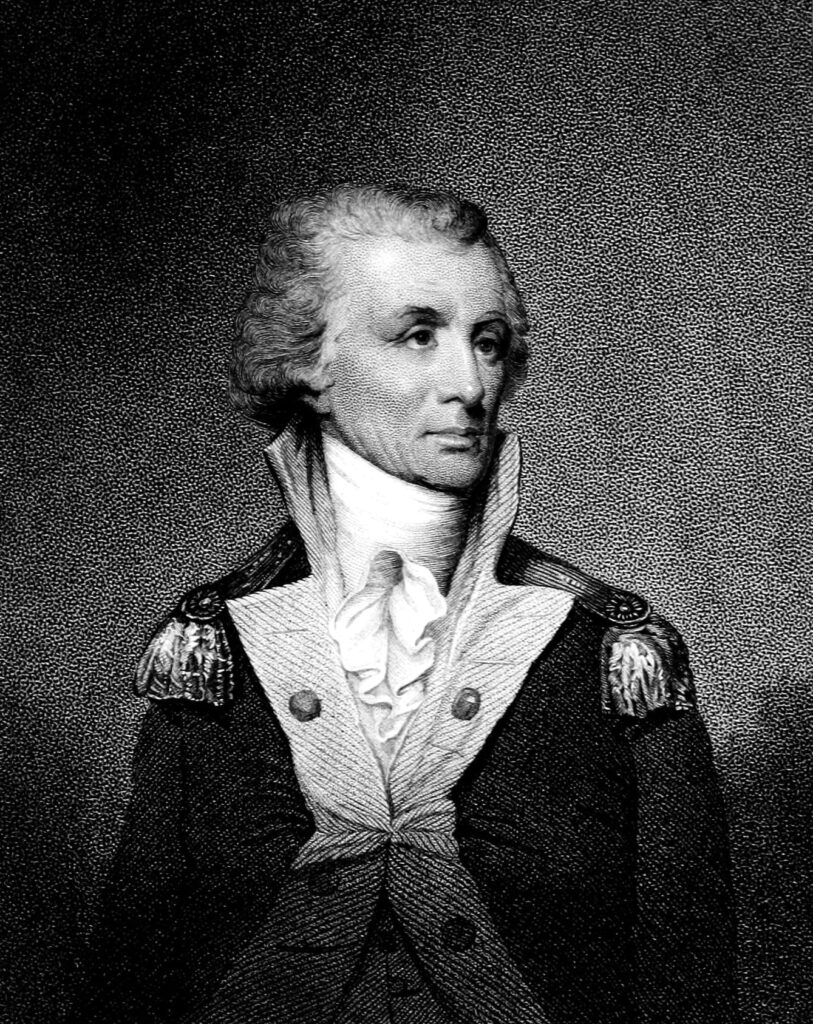
Image of Thomas Sumter (1734–1832), known as the “Gamecock,” commanded the South Carolina Patriot militia that repelled a British attack at Fishdam Ford on November 9, 1780. Just eleven days later, he was severely wounded at Blackstock’s Plantation, where his men again fought off British forces.
