
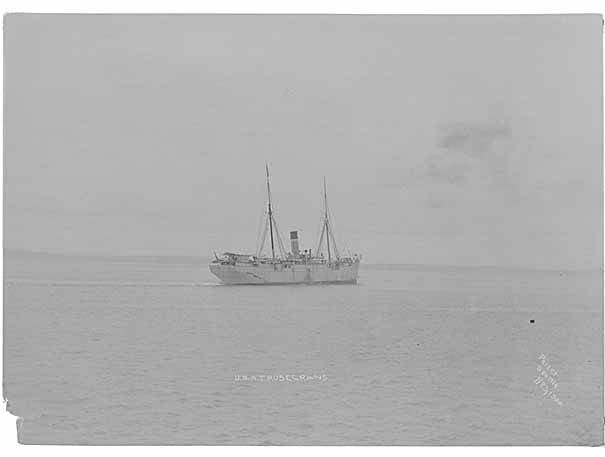
When the U.S. Army Transport Rosecrans steamed out of the Seattle harbor on July 23, 1900, her decks were packed with American soldiers bound for the multi-national China Relief Expedition. Sent to reinforce Allied legations besieged by Boxer insurgents in Peking, these troops were entering a chaotic, sprawling conflict that would mark America’s first major military intervention in an Asian land war. The deployment represented a stark geopolitical pivot, signaling to the empires of Europe that the United States was ready to wield its newfound post-Spanish-American War military might across the Pacific.
The deeply human, unmentioned reality of the Rosecrans’ departure lies in the ship’s own notoriously cursed maritime legacy. Originally a commercial freighter named the Methven Castle, the vessel was widely disliked by soldiers for its cramped, foul conditions and structural instability in rough seas. As those young men watched the Pacific Northwest coastline fade from view, they were riding a ship that would repeatedly suffer engine failures, fires, and groundings throughout its military career, foreshadowing the treacherous, unpredictable environment that awaited them in the grueling terrain of Northern China.
