
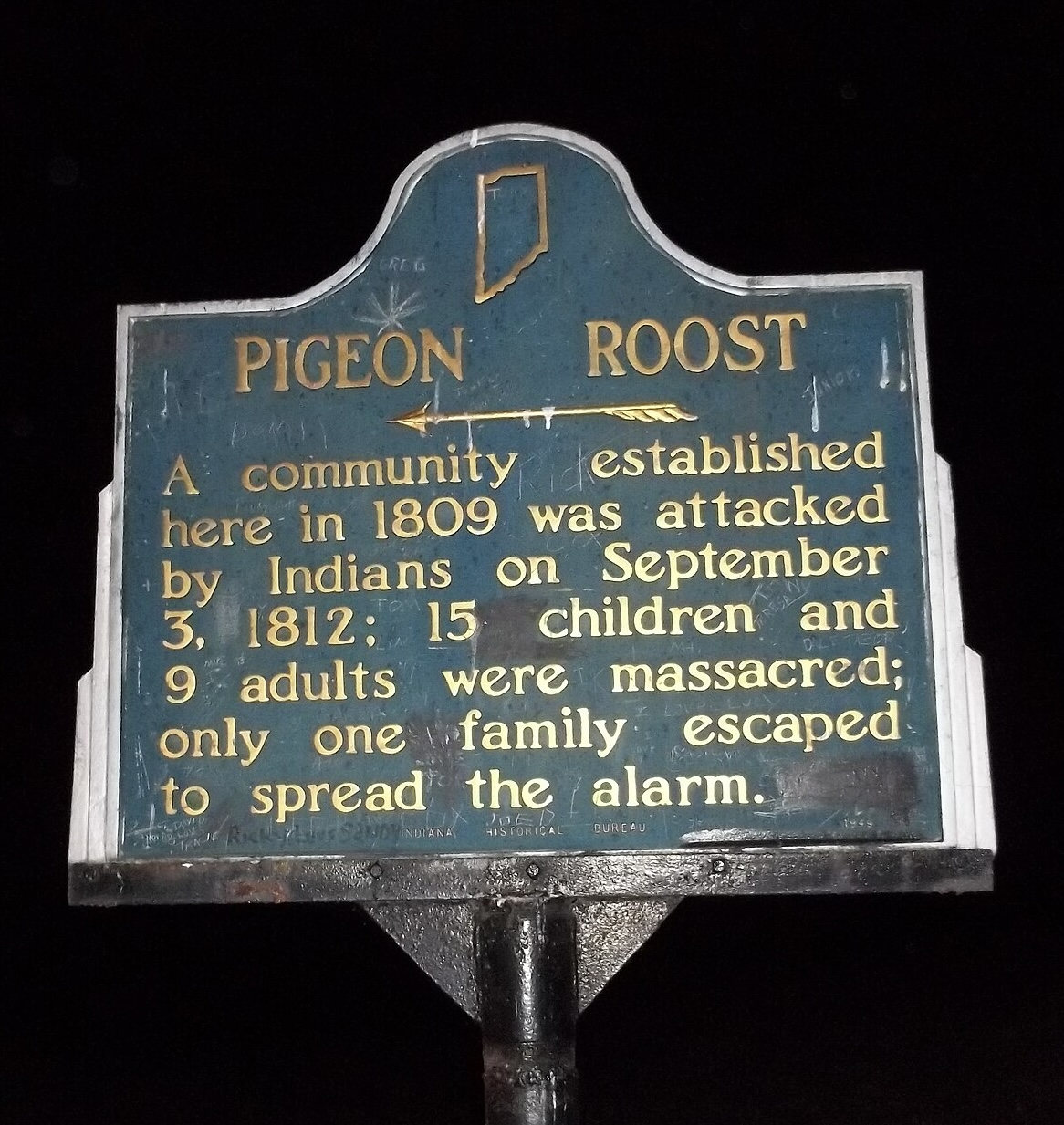
On the evening of September 3, 1812, a war party composed largely of Shawnee men attacked the frontier settlement of Pigeon Roost, near present-day Scottsburg in Scott County, Indiana. The raid came only months after the United States declared war on Great Britain and amid an escalating conflict across the Old Northwest between American settlers, U.S. forces, and Native nations resisting further settlement on their homelands.
The attack was swift and devastating. Twenty-four settlers were killed, including 15 children and 9 adults; two children were taken captive. The loss shook nearby communities, where families feared further raids and increasingly sought protection in forts and blockhouses. Clark County militia pursued the attackers but did not catch them.
Pigeon Roost was not simply an isolated frontier tragedy. It emerged from a wider struggle over land, sovereignty, and survival. Native nations in the region faced relentless pressure from U.S. expansion, while the War of 1812 intensified existing violence along the frontier. The Pigeon Roost raid occurred in the same month as attacks on Fort Harrison and Fort Wayne, underscoring the insecurity that marked Indiana Territory during the conflict.
In 1904, Indiana appropriated $2,000 for a memorial at Pigeon Roost, which was dedicated on October 1 of that year. The site became a state historic site in 1929. The limestone obelisk and surrounding grounds remain a memorial to those killed—and a reminder that the War of 1812 was fought not only between the United States and Britain, but also through violent struggles over Native land and power in the American West.
Image: Pigeon Roost memorial, via Wikimedia Commons, CC BY 3.0
