
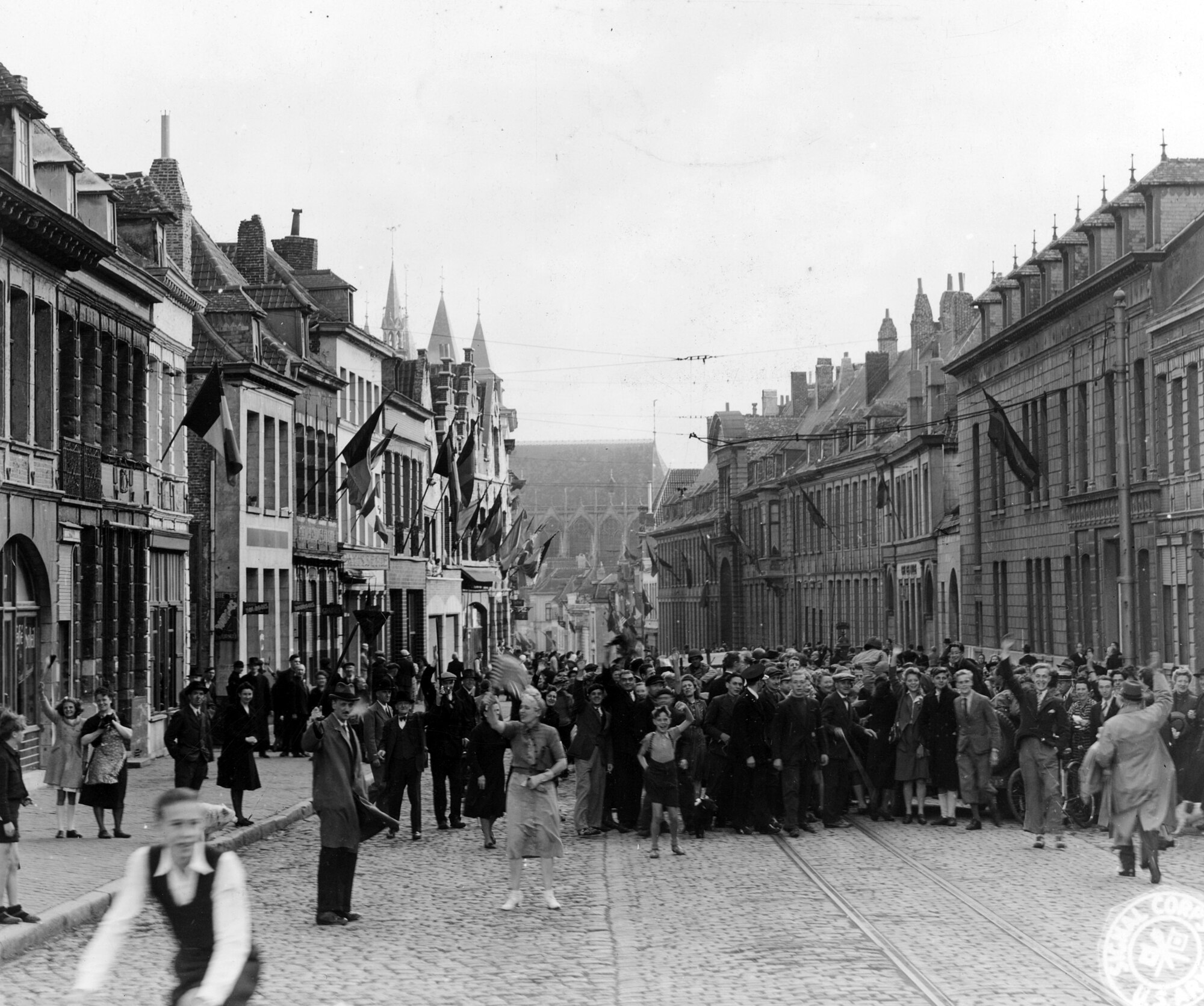
On 3 September 1944, celebration erupted in Couvin, Belgium, as local residents poured into the streets to welcome the vanguard of the United States Army. The American troops arrived during the Allied advance that followed the breakout from Normandy and the liberation of Paris, driving German occupation forces from the town. Contemporary photographs show civilians crowding around the arriving vehicles in an outpouring of relief and joy.
Couvin’s liberation came during the remarkably swift Allied advance into Belgium in early September 1944. The previous day, elements of the First U.S. Army had crossed the Belgian border, and on 3 September Allied forces liberated several Belgian towns and cities, including Couvin.
For Couvin’s residents, the moment marked the end of more than four years of German occupation. Daily life under Nazi rule had brought shortages, restrictions, repression, and uncertainty. The arrival of American soldiers therefore carried meaning far beyond a change in military control: it restored hope, public freedom, and the prospect of Belgium’s eventual liberation.
The liberation of Couvin also illustrates the speed and reach of the Allied advance in the weeks after Normandy. As German forces withdrew toward their eastern defenses, Allied troops moved rapidly through northern France and Belgium, seeking to sustain their momentum before the enemy could regroup. Couvin’s welcome for the American vanguard became one local expression of a larger liberation unfolding across Belgium.
Image: Residents of Couvin, Belgium, flock into the streets to welcome the vanguard of American troops after the Nazis were driven out, 3 September 1944. Via Wikimedia Commons; public-domain U.S. government photograph
