
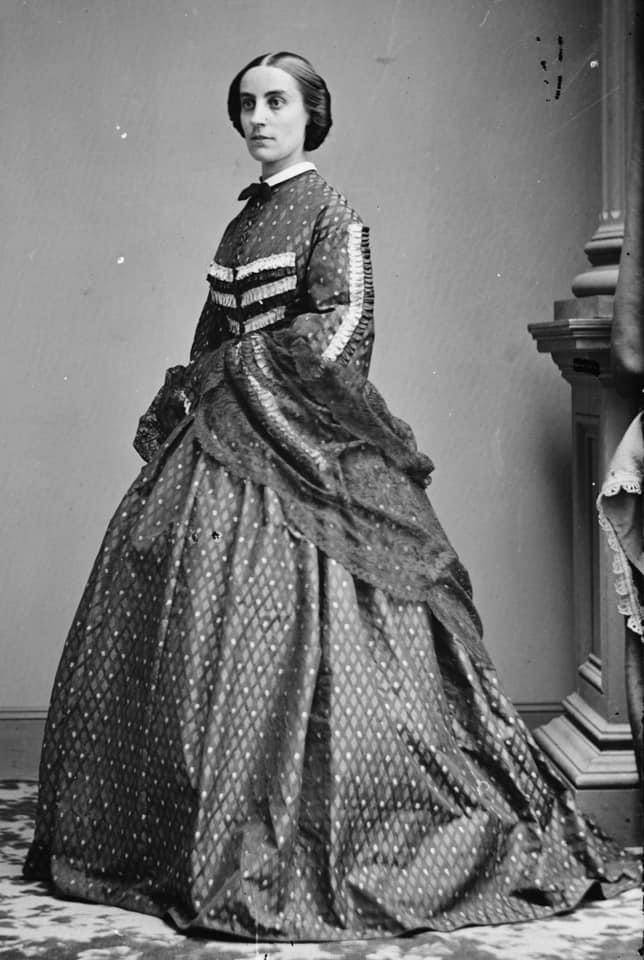
On July 23, 1862, Major General Henry W. Halleck officially assumed command over the entire Union Army, a promotion that placed the monumental burden of a fractured nation squarely on his shoulders. Known as “Old Brains” for his brilliant theoretical writings on military strategy, Halleck’s actual field tenure would prove deeply divisive, marked by an overly cautious approach that frustrated President Abraham Lincoln. Navigating the brutal political infighting of wartime Washington, Halleck’s domestic sanctuary was anchored by his wife, Elizabeth Hamilton—the deeply cultured granddaughter of founding father Alexander Hamilton.
The profound, unspoken irony tying Elizabeth Hamilton’s lineage to Halleck’s high-stakes command rests on the shifting definitions of American federal power. Elizabeth grew up surrounded by the living legacy of her grandfather, who had fought fiercely to establish a centralized military and a strong federal government. Decades later, as her husband took control of the army, he was tasked with using that exact centralized federal power to crush a rebellion that threatened to destroy Hamilton’s constitutional dream—proving that the preservation of the Union was a deeply personal, multi-generational family business.
