
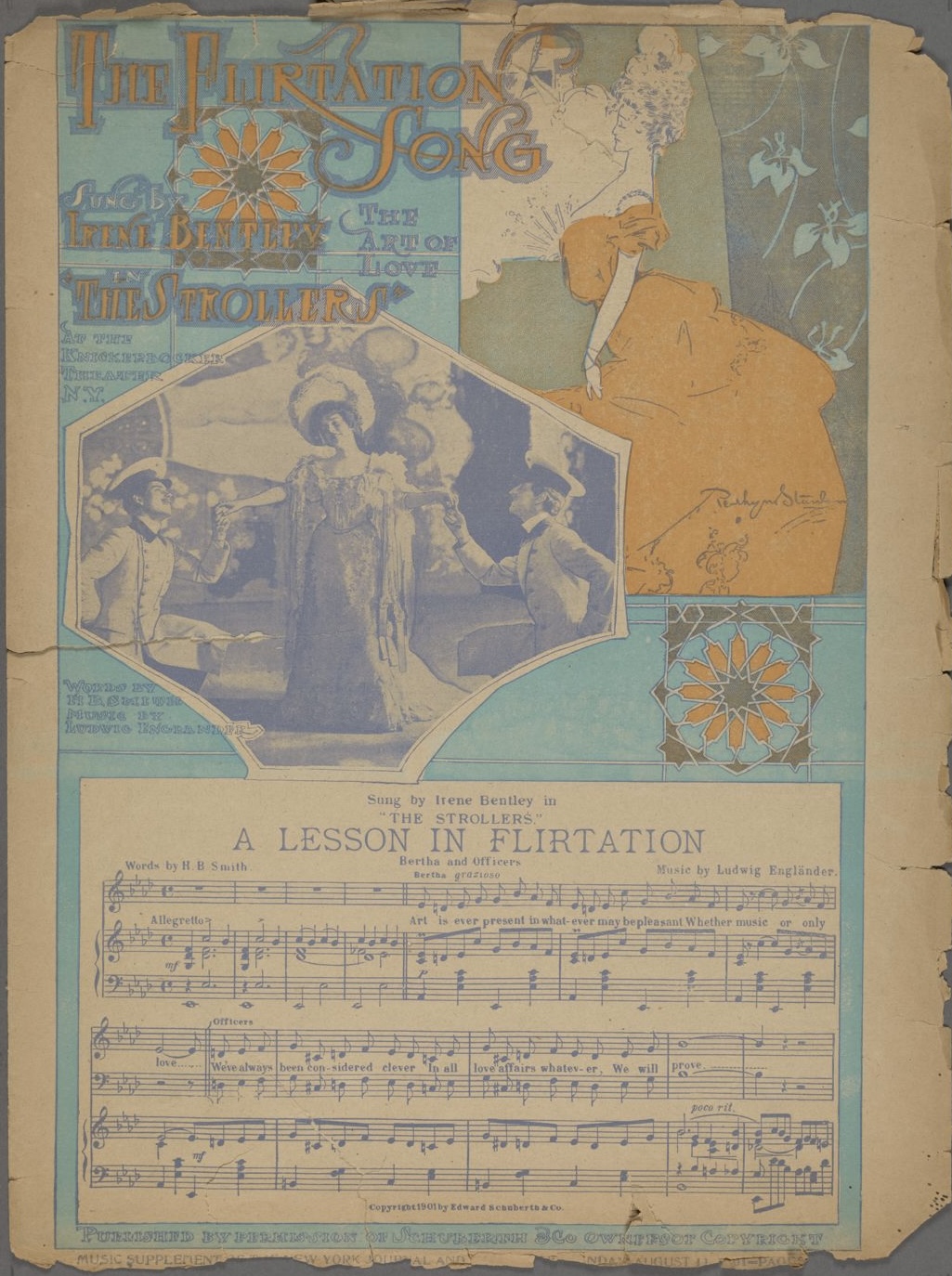
On August 11, 1901, the printing of the sheet music cover for the popular melody “A Lesson In Flirtation” captured a fascinating and highly coded aspect of early 20th-century social life. At the turn of the century, “flirtation songs” emerged as an immensely popular genre of commercial sheet music consumed by millions of households across America. These musical pieces were far more than simple entertainment; they served as essential social icebreakers designed to navigate the notoriously rigid dating etiquette of the era.
In the highly restrictive and heavily chaperoned social climate of the late Victorian and early Edwardian periods, young men and women faced severe limitations on physical contact and open romantic expression. Direct courtship was intensely scrutinized, leaving youth to seek out alternative, socially acceptable methods to signal romantic attraction. Sitting down together at a family parlor piano to practice a cheeky, lighthearted, and inherently romantic duet provided couples with a perfect, blameless excuse to interact.
The physical choreography of playing and singing these flirtation songs allowed couples to sit in close proximity, share intimate glances, and engage in subtle banter without violating the strict household chaperone rules. The sheet music for “A Lesson In Flirtation” represents an era when romance required clever subversion and creative expression. This cultural phenomenon fueled a massive boom for the American sheet music industry, turning the domestic piano into the epicenter of youthful romance and modern courtship.
