
On August 12, 1898, Washington, D.C., became the stage for a decisive geopolitical turning point as representatives of Spain and the United States signed the peace protocol ending the Spanish‑American War. The agreement halted a brief but intense conflict fought across Cuba, Puerto Rico, Guam, and the Philippines, signaling the collapse of Spain’s centuries‑old colonial presence in the Western Hemisphere. For the United States, the protocol marked the moment the nation formally stepped beyond its continental boundaries and assumed stewardship of new overseas territories, reshaping its role on the world stage.
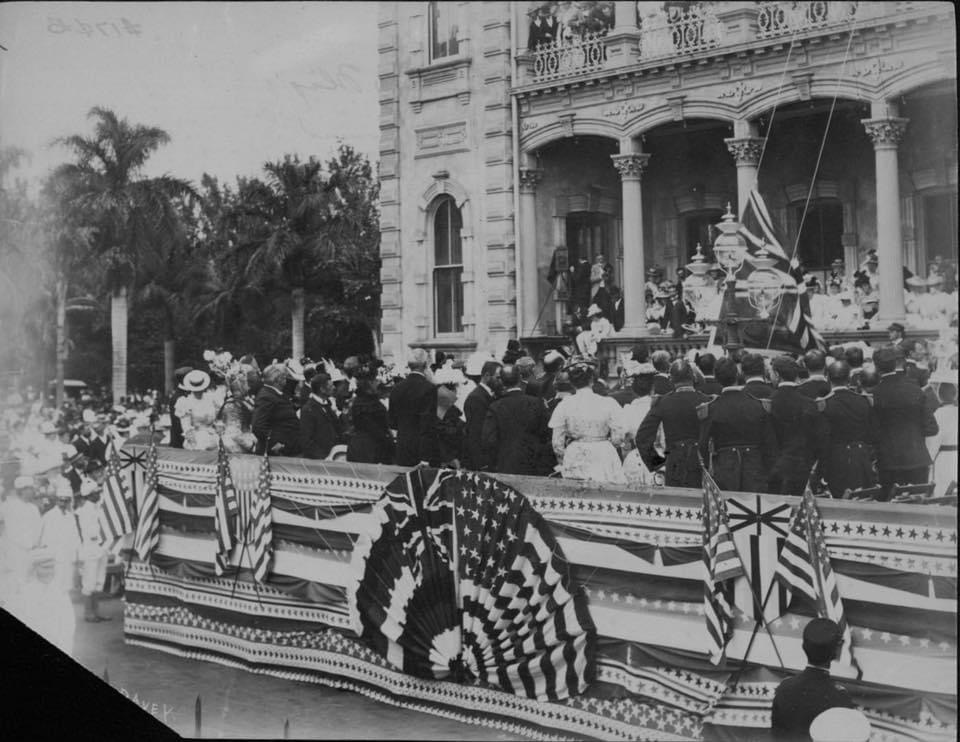
That same day, thousands of miles away in Honolulu, a quieter but equally consequential ceremony unfolded on the grounds of ʻIolani Palace. As the peace protocol was being finalized in Washington, officials in Hawaii lowered the flag of the former Hawaiian Kingdom and raised the Stars and Stripes, completing the annexation approved by Congress earlier that summer. Though Hawaii had seen no combat during the war, its strategic location made it an essential link in America’s emerging Pacific network, especially as the nation prepared to administer its new responsibilities in the Philippines.
For many Native Hawaiians, the flag‑raising was a solemn and painful moment, marking the end of an independent monarchy and the culmination of political upheaval that had begun years earlier. Yet for American policymakers, the annexation represented a strategic consolidation at a time of rapid global change, ensuring a secure naval foothold in the Pacific as the United States transitioned into a new era of international engagement.
Together, these two events on August 12 illustrate the complex duality of American history at the turn of the century — a nation concluding one war, redefining its global identity, and extending its reach across the Pacific, even as the consequences of that expansion were felt differently by the peoples whose lands became part of the American story.
