
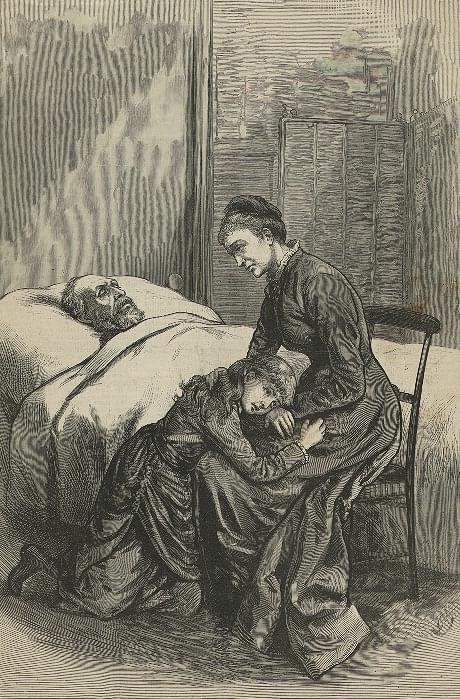
On September 19, 1881, James A. Garfield, the twentieth president of the United States, died at a seaside cottage in Elberon, New Jersey, from complications of wounds inflicted by an assassin more than two months earlier. Garfield had been shot at Washington’s Baltimore and Potomac Railroad Station on July 2 by Charles J. Guiteau, a disgruntled and delusional office-seeker. He was 49 years old. After an agonizing 80-day struggle, Garfield’s death brought national mourning and focused new attention on unresolved questions of presidential incapacity, succession, and the political patronage system.
Garfield’s long decline also exposed the grave limits of late nineteenth-century American medicine. One bullet only grazed him, while the other lodged deep in his body without immediately damaging a vital organ. Physicians repeatedly searched for the projectile with unsterilized fingers and instruments, practices that likely worsened infection at a time when many American doctors had not accepted antiseptic methods. Garfield ultimately died amid sepsis, internal complications, and severe physical deterioration. While historians and medical experts broadly agree that his treatment substantially reduced his chances of survival, the precise medical mechanism of his death remains a subject of historical debate.
Garfield’s assassination also intensified the movement for civil-service reform. Guiteau believed he deserved a government appointment for supposed political services, making the killing an especially stark indictment of the patronage, or “spoils,” system. In January 1883, President Chester A. Arthur signed the Pendleton Civil Service Reform Act, which established a merit-based system for portions of the federal workforce and created the foundation for the modern professional civil service. The law did not end patronage overnight, but Garfield’s death gave reform a decisive political urgency.
Garfield’s passing remains a somber turning point in presidential history: a national tragedy shaped by political patronage, limited medical practice, and the institutional strains of a presidency cut short.
Image via New York Public Library Digital Collections, no known restrictions
