
On July 2–3, 1863, the 149th New York Infantry—Syracuse’s “Fourth Onondaga”—fought in George S. Greene’s Brigade during the crucial defense of Culp’s Hill at Gettysburg. From hastily built breastworks of logs, rails, stone, and earth, the regiment helped repel repeated Confederate attacks through the night of July 2 and during renewed fighting the next morning. By holding the heights, Greene’s brigade preserved the Union right and helped protect the vital Baltimore Pike, a key route for Union supply and communication.
In the heaviest fighting, the regiment’s flag was pierced by more than eighty bullets and its staff was shot in two. Color Sergeant William C. Lilly retrieved the fallen colors under fire and repaired the broken staff with improvised wooden splints and straps from his knapsack, returning it to the breastworks. Lilly later died from wounds received at Wauhatchie, Tennessee, in November 1863.
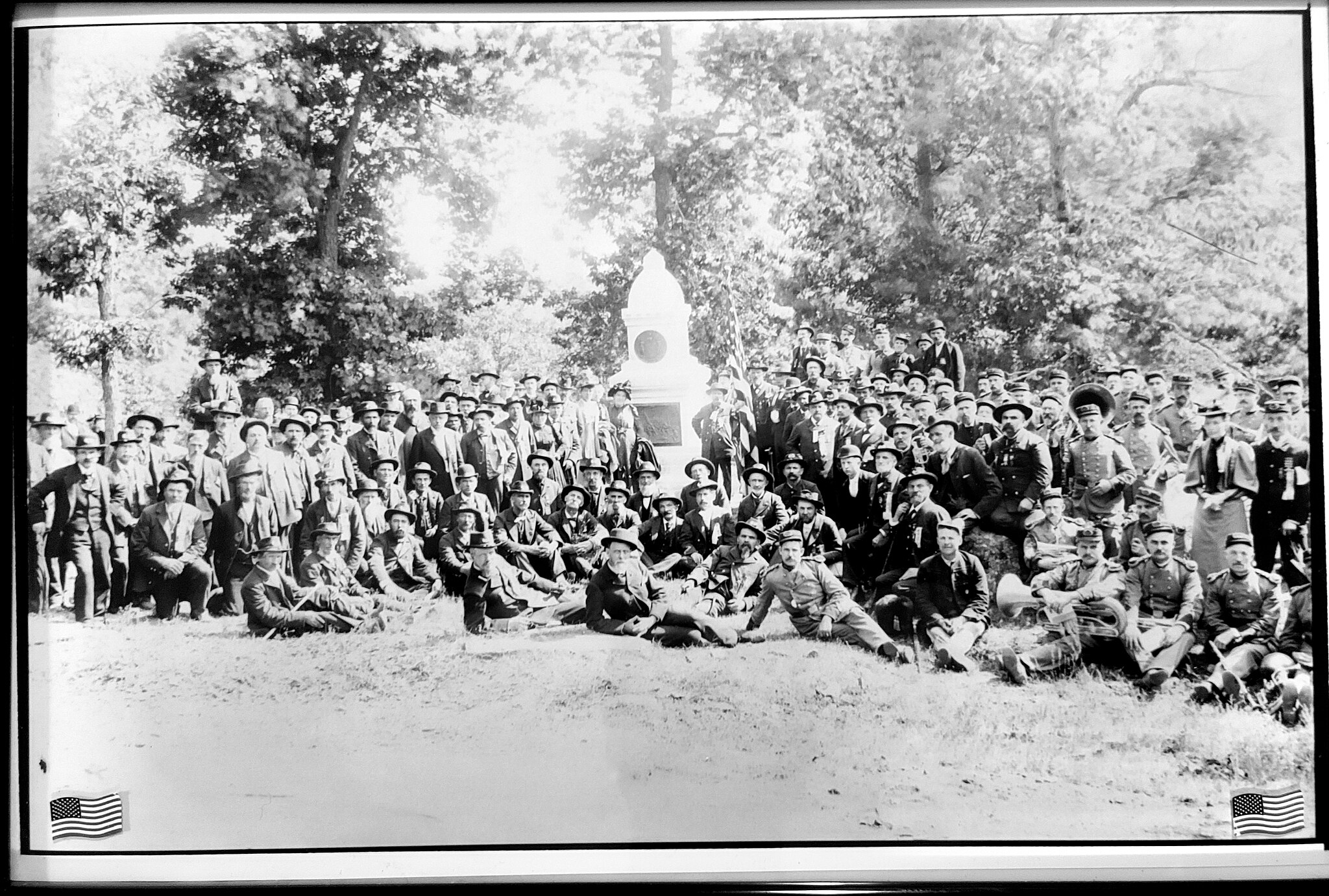
Nearly three decades later, surviving members of the 149th returned to Culp’s Hill to dedicate their monument on September 18, 1892. The monument’s bronze relief memorializes Lilly’s act of mending the colors under fire. In this photograph, the veterans stand beside the memorial on the ground where they fought—turning a place of desperate combat into one of shared remembrance.
Led by a succession of wounded officers, the 149th stood firm. Their monument now marks the ground they defended, and their legacy lives on in the veterans who gathered decades later—like those pictured here in Gettysburg, September 19, 1892.
