
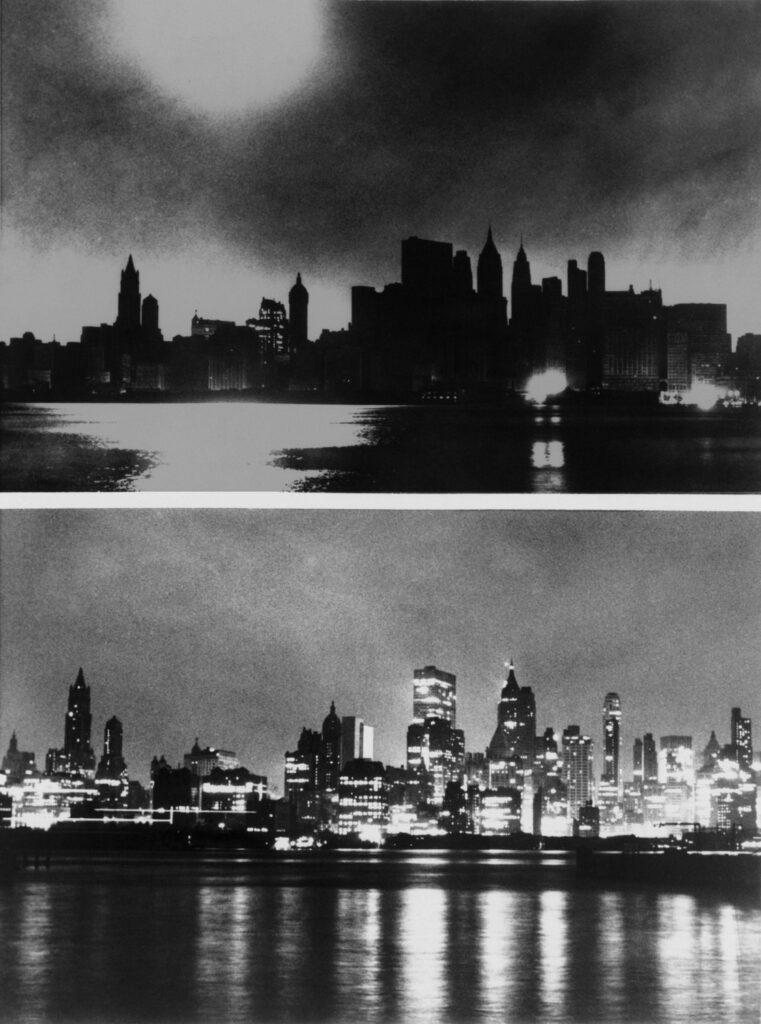
On the evening of November 9, 1965, an ordinary autumn rush hour became a vast power emergency. A cascading electrical failure swept across much of the northeastern United States and parts of Ontario, leaving roughly thirty million people without electricity, some for as long as thirteen hours. The failure began when a protective relay opened a transmission line carrying power from a generating plant in Ontario toward Toronto. As electricity shifted onto the remaining lines, they tripped in rapid succession, setting off a wider collapse across the interconnected grid.
The blackout exposed a vulnerability hidden within the convenience of modern urban life: millions of people depended on an electrical system whose workings they rarely had reason to consider. Its interconnectedness was both a strength and a risk. The same transmission network that allowed utilities to share power also allowed a local disturbance to spread far beyond its point of origin.
The consequences extended beyond the restoration of electricity. The blackout helped lead to the creation of the North American Electric Reliability Council in 1968, through which utilities developed and promoted voluntary reliability standards. Its legacy was not an instant ptransformation of the world’s electrical systems, but a stronger institutional commitment to coordinating and protecting the North American grid. The central lesson was clear: an interconnected system required coordinated safeguards as well as shared power.
Images: During and after photos of New York City’s Manhattan skyline November 9-10, 1965, when the lights went out for 12 hours in the Northeast States and Canada via Alamy
