
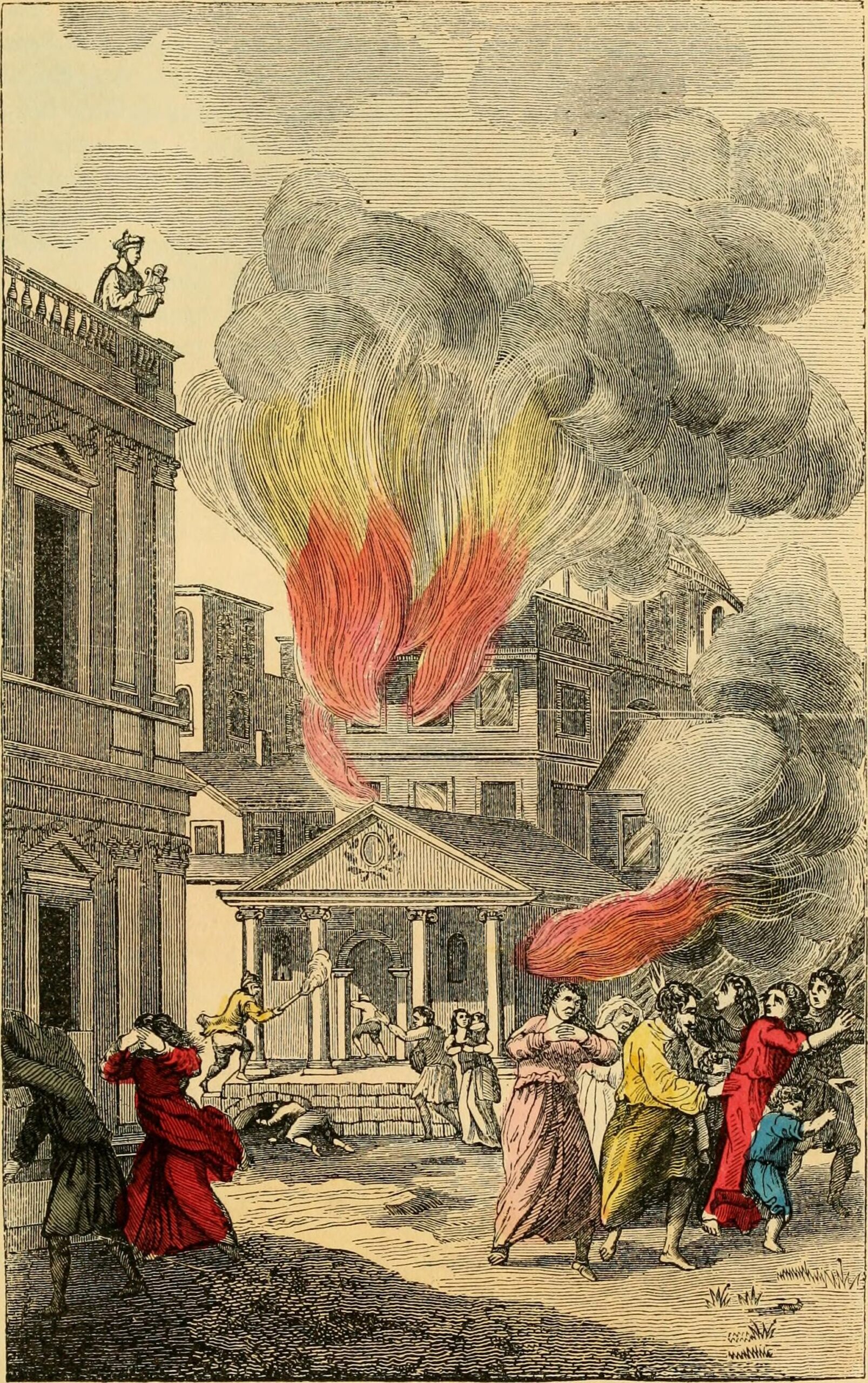
On July 18 in the year 64 CE, a fire ignited near the Circus Maximus and tore through ancient Rome, becoming one of history’s most destructive urban catastrophes. The blaze consumed entire districts and later inspired the enduring legend of Emperor Nero watching the city burn — a dramatic image shaped more by later writers than by contemporary accounts. Yet this ancient disaster would eventually find a surprising second life in the United States, where it became both a cultural spectacle and a scientific case study.
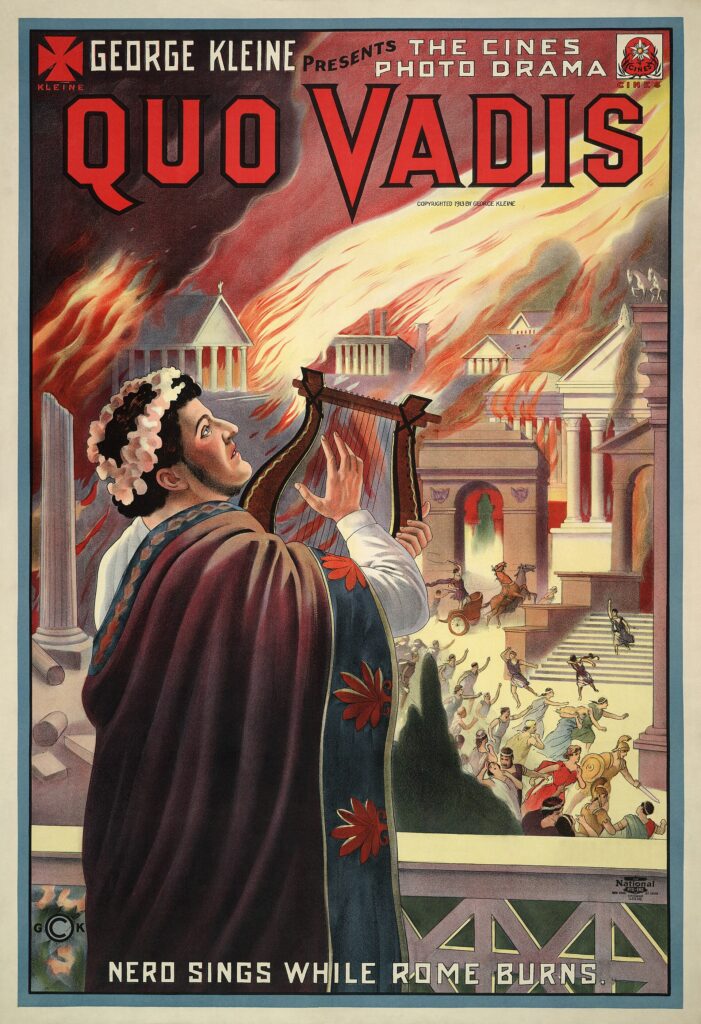
Throughout the 19th and early 20th centuries, American artists and entertainers turned the Great Fire into a vivid part of national culture. U.S. theaters staged large‑scale productions such as Nero; or, The Burning of Rome, complete with fiery tableaux and collapsing sets that thrilled audiences in New York, Philadelphia, and Boston. American illustrators and painters produced engravings and canvases depicting Nero amid the flames, many published in magazines like Harper’s Weekly and used in schoolbooks to teach classical history. Early American silent‑film studios recreated the inferno with elaborate pyrotechnics, while U.S. theaters widely distributed European epics like Quo Vadis?, cementing the fire as a staple of American historical cinema.
At the same time, the Great Fire became a practical tool for American innovation. U.S. engineering schools, fire‑protection manuals, and early National Fire Protection Association training materials used the Roman disaster to teach principles of fire spread, combustible construction, evacuation failure, and urban vulnerability. American architects cited Rome’s reconstruction when advocating for wider streets, masonry buildings, and zoning reforms in cities like Boston, Chicago, and New York. In this way, the July 18 fire became more than an ancient tragedy — it became a cultural touchstone and a scientific model that helped shape American theater, art, urban design, and early disaster‑response theory.
