
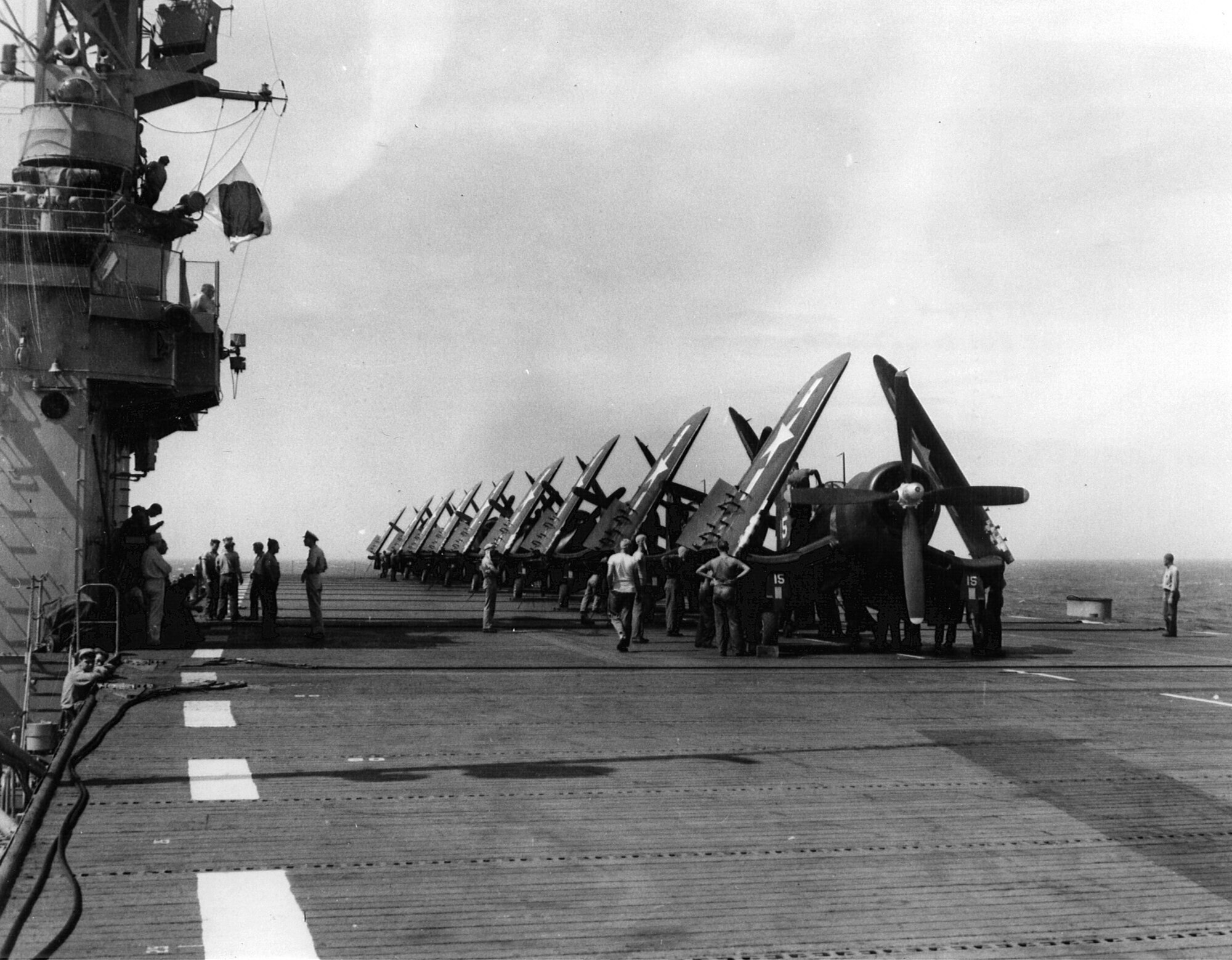
In July 1945, an extraordinary naval scene unfolded off the coast of Florida as a squadron of U.S. Navy Vought F4U‑4 Corsairs sat lined up with their distinct gull‑wings folded tight on the flight deck of the USS Solomons. Operating during the final, tense weeks of World War II, this carrier training period served as a critical staging ground to test aircraft readiness for the impending, massive amphibious invasion of the Japanese mainland.
The fascinating technical layer behind this July fleet deployment was the sudden integration of advanced radar‑directed picket tactics aboard the Solomons. As the Japanese military turned to desperate, low‑altitude kamikaze attacks in the Pacific, the Navy rushed these Corsairs through rapid‑launch interception drills along the Florida coast. Pilots learned to leap from the carrier deck in under sixty seconds to meet incoming threats, transforming these folded‑wing fighters into America’s primary shield against suicide strikes during the war’s climactic final months.
Image: Wikimedia Commons, public domain
