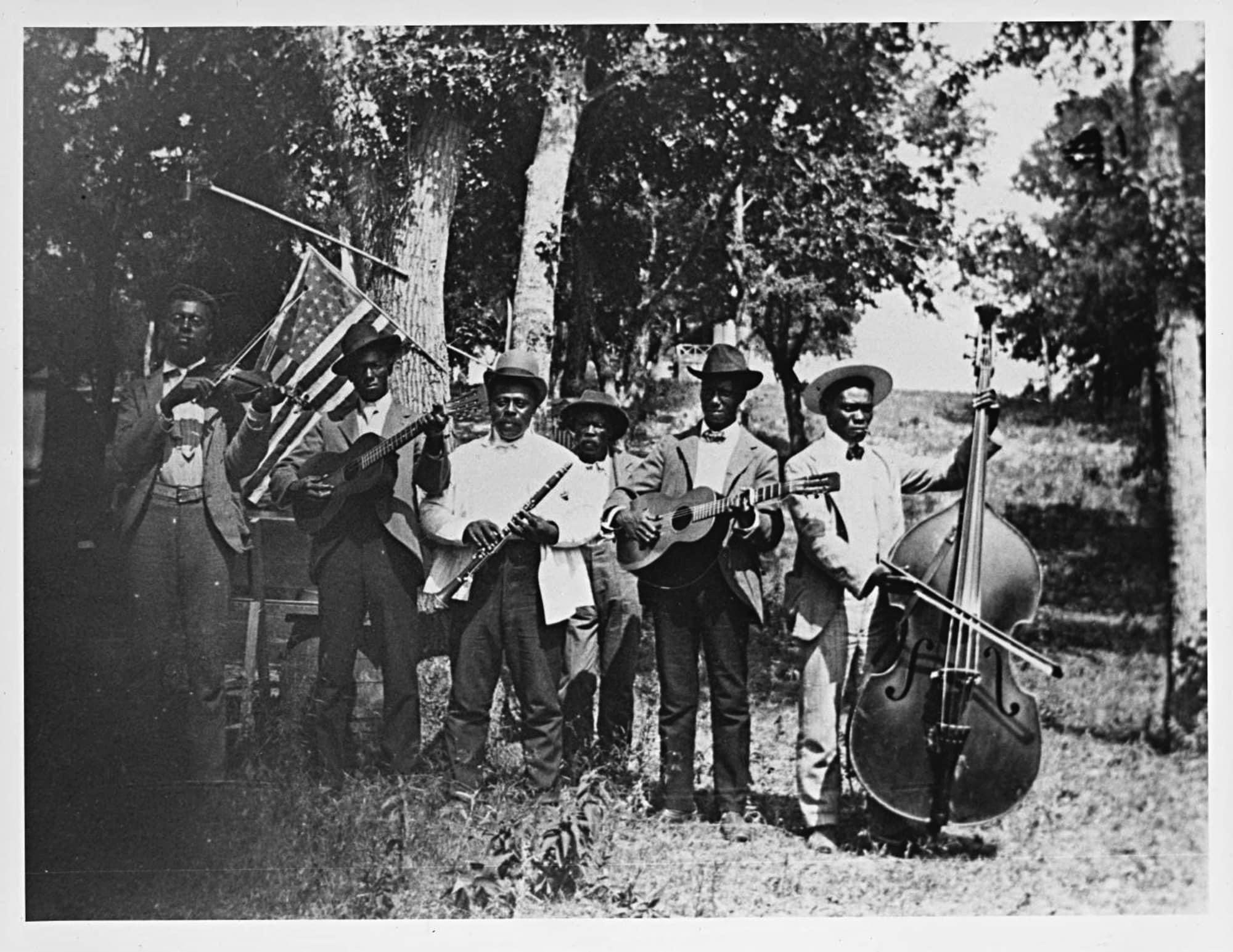
On June 19, 1900, a striking photograph captured an African American brass band dressed in sharp uniforms performing at a Juneteenth celebration in Texas. The event marked exactly 35 years since Union Major General Gordon Granger arrived in Galveston to enforce the Emancipation Proclamation, finally freeing the last remaining enslaved population in the United States. By the turn of the century, these celebrations had evolved into massive, community-wide festivals featuring pageants, horse races, and vibrant musical performances.
In the early decades of the 20th century, celebrating Juneteenth in public spaces was an act of profound resistance. Segregation laws frequently banned Black communities from utilizing public parks, forcing families to hold celebrations near rivers or rural church grounds. To ensure they would always have a place to gather, groups of former enslaved people pooled their money to purchase their own land, creating dedicated spaces like Houston’s Emancipation Park specifically to celebrate their freedom.
Image via Wikimedia Commons, public domain