
On September 16, 1908, entrepreneur William Crapo “Billy” Durant incorporated the General Motors Company in New Jersey, establishing a holding company that would help reshape the American automobile industry. Flint, Michigan—where Durant had helped turn Buick into a leading automaker—remained the practical center of his expanding enterprise. GM initially rested on Buick, with Oldsmobile joining later that year; Cadillac and Oakland became part of the company in 1909.
Durant envisioned a corporation that could unite independent automobile manufacturers and suppliers under shared financial control. His approach represented an important shift from a fragmented industry of small firms toward large-scale corporate consolidation. Within little more than a year, GM had assembled a growing collection of carmakers, truck companies, and parts suppliers, including Buick, Oldsmobile, Cadillac, and Oakland, the predecessor of Pontiac.
Over time, this multi-brand structure became one of GM’s defining strengths. Rather than relying on a single model or customer base, the company could market vehicles at different price points and to different kinds of buyers. That breadth helped GM compete in a rapidly changing industry while supporting investments in engineering, manufacturing capacity, components, and distribution.
The 1908 founding did not immediately create the modern automobile economy, but it laid the organizational foundation for one of the twentieth century’s most influential industrial corporations. GM would go on to shape manufacturing practices, labor relations, consumer culture, city planning, and the place of the automobile in American life. Its importance lay less in inventing mass motoring than in building a vast corporate system around it—one that made the automobile industry increasingly national, integrated, and commercially diverse.
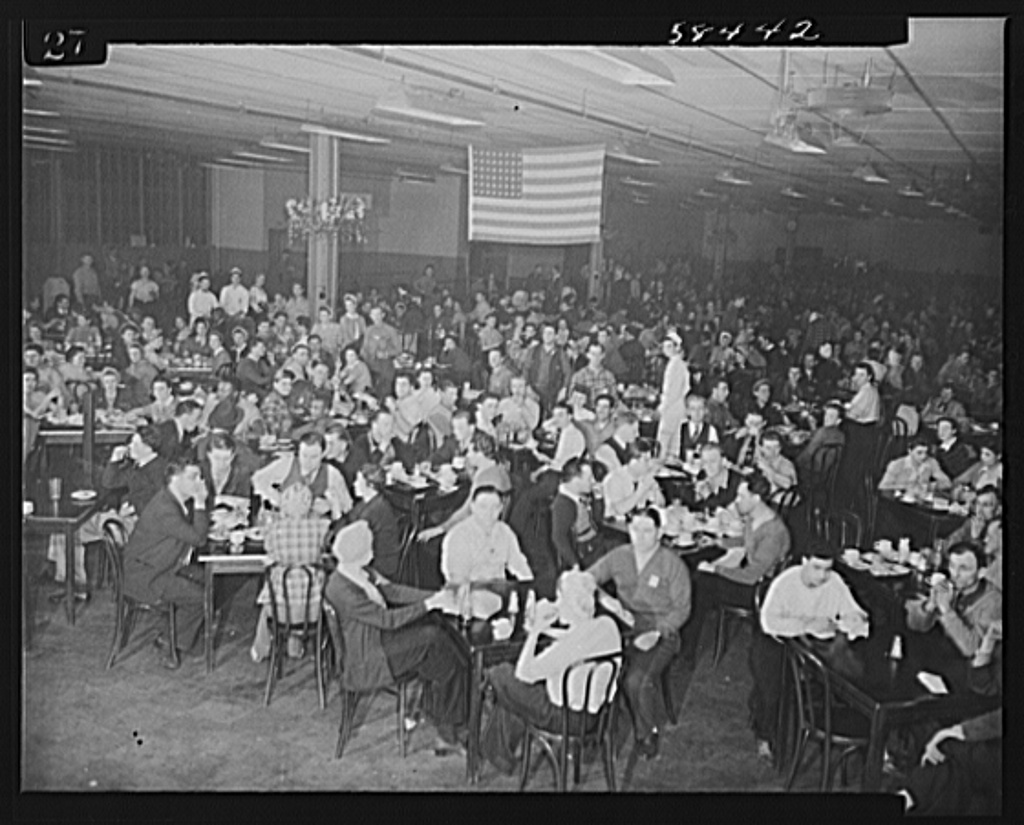
Image: General Motors Corporation, Eastern Aircraft Division. Linden, New Jersey c. 1940s
