
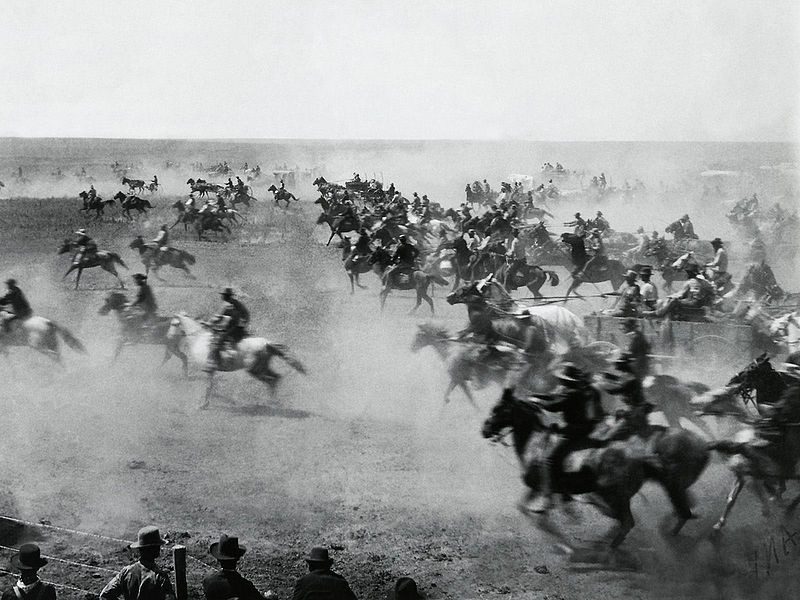
On September 16, 1893, one of the most dramatic episodes of American westward expansion unfolded in what is now northern Oklahoma. At noon, a signal shot began the Cherokee Outlet opening—commonly known as the Cherokee Strip Land Run—as more than 100,000 prospective settlers raced by horse, wagon, train, and on foot to claim homesteads and town lots.
The federal government had acquired the land from the Cherokee Nation for more than $8.5 million after years of political and economic pressure. The opening placed roughly 6 million acres on the market, creating about 40,000 homesteads and helping spur the rapid growth of towns including Enid, Perry, Woodward, and Alva.
The run was chaotic from the beginning. Participants rushed to locate parcels, mark claims, and reach a land office to file the required paperwork. Dust, heat, crowds, boundary conflicts, and fraudulent “sooner” claims—people entering before the official opening—complicated the process. The event was Oklahoma’s fourth and largest land run, and it produced widespread hardship as well as opportunity.
The land run transformed the region with astonishing speed, but its legacy is inseparable from the history of U.S. expansion onto Indigenous land. For many settlers, it represented a chance to pursue landownership and economic independence. For the Cherokee Nation, however, it marked another major loss of territory and control under federal pressure. The Cherokee Strip Land Run remains a powerful, complicated symbol of both settlement and dispossession in U.S. history.
Image via Wikimedia Commons; public domain in the United States.
