
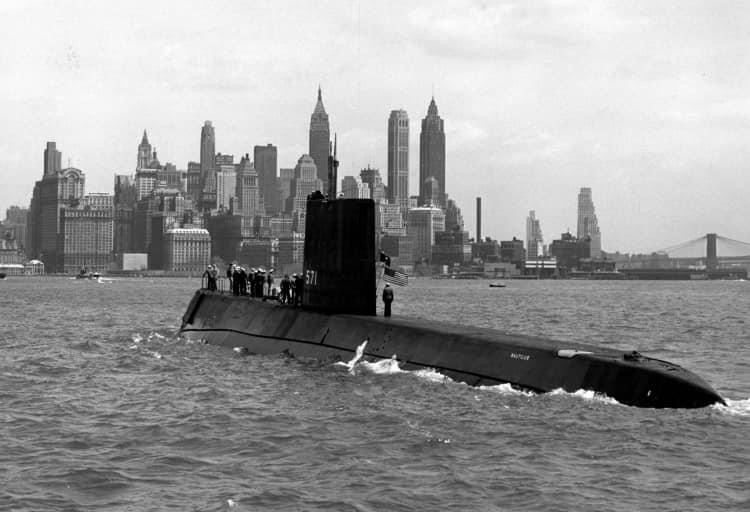
The technological dynamics of maritime warfare changed fundamentally on September 30, 1954, when the world’s first nuclear-powered submarine, USS Nautilus (SSN-571), was commissioned at Groton, Connecticut. Made possible by the naval-reactor program led by Captain Hyman G. Rickover, the vessel used a Westinghouse S2W pressurized-water reactor—freeing submarine operations from the tactical constraints imposed by fossil-fuel propulsion.
Before Nautilus, diesel-electric submarines depended on atmospheric oxygen to run their diesel engines and recharge their batteries. They therefore had to surface or operate a snorkel periodically, exposing themselves to detection and limiting their submerged endurance. Nuclear propulsion made the submarine a genuine long-endurance submersible: it could remain underwater for extended periods, with practical limits imposed chiefly by food, crew endurance, and maintenance rather than fuel or air for propulsion.
Nautilus soon demonstrated the consequences of that change. On August 3, 1958, during the secret Operation Sunshine, she became the first vessel to reach the geographic North Pole, passing beneath the Arctic ice while submerged. The achievement helped establish the operational potential of nuclear-powered submarines and marked the beginning of the U.S. nuclear Navy—developments that would profoundly shape Cold War naval strategy.
Image credit: USS Nautilus arriving in New York City in the late 1950s, via Wikimedia Commons, public domain.
