
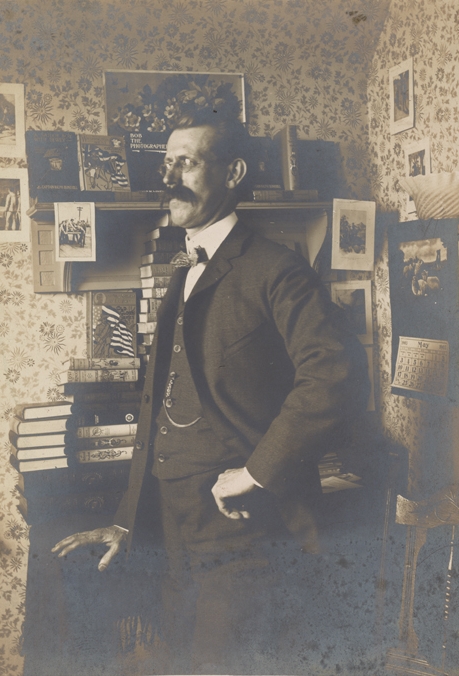
On October 4, 1862, Edward Stratemeyer was born in Elizabeth, New Jersey. An American author, publisher, and pioneering book packager, Stratemeyer became one of the chief architects of twentieth-century children’s series fiction. With a shrewd instinct for what young readers wanted—and an unusually systematic approach to publishing—he built a literary enterprise whose influence can still be felt in popular fiction today.
By 1905–06, Stratemeyer had established the Stratemeyer Syndicate, a publishing operation that functioned much like a fiction factory. He devised series concepts and supplied plot outlines, then hired a rotating group of writers to turn those plans into full manuscripts. The writers were typically paid a flat fee, received no royalties, and published under permanent house names rather than their own.
Through this model, the Syndicate produced or developed some of the best-known names in children’s literature: The Bobbsey Twins, published under the pseudonym Laura Lee Hope; The Hardy Boys, under Franklin W. Dixon; and Nancy Drew, under Carolyn Keene. It also produced enduring series including Tom Swift and The Rover Boys. The first Hardy Boys story appeared in 1927, while Nancy Drew made her debut in 1930, the year of Stratemeyer’s death.
Stratemeyer did not invent commercial series fiction, but he helped transform it into a durable mass-market institution. His formula of recognizable characters, continuing adventures, rapid production, and corporate pseudonyms made leisure reading a dependable part of American childhood for generations.
Image credit: Archival portrait photograph of publisher Edward Stratemeyer, via Wikimedia Commons, public domain.
