
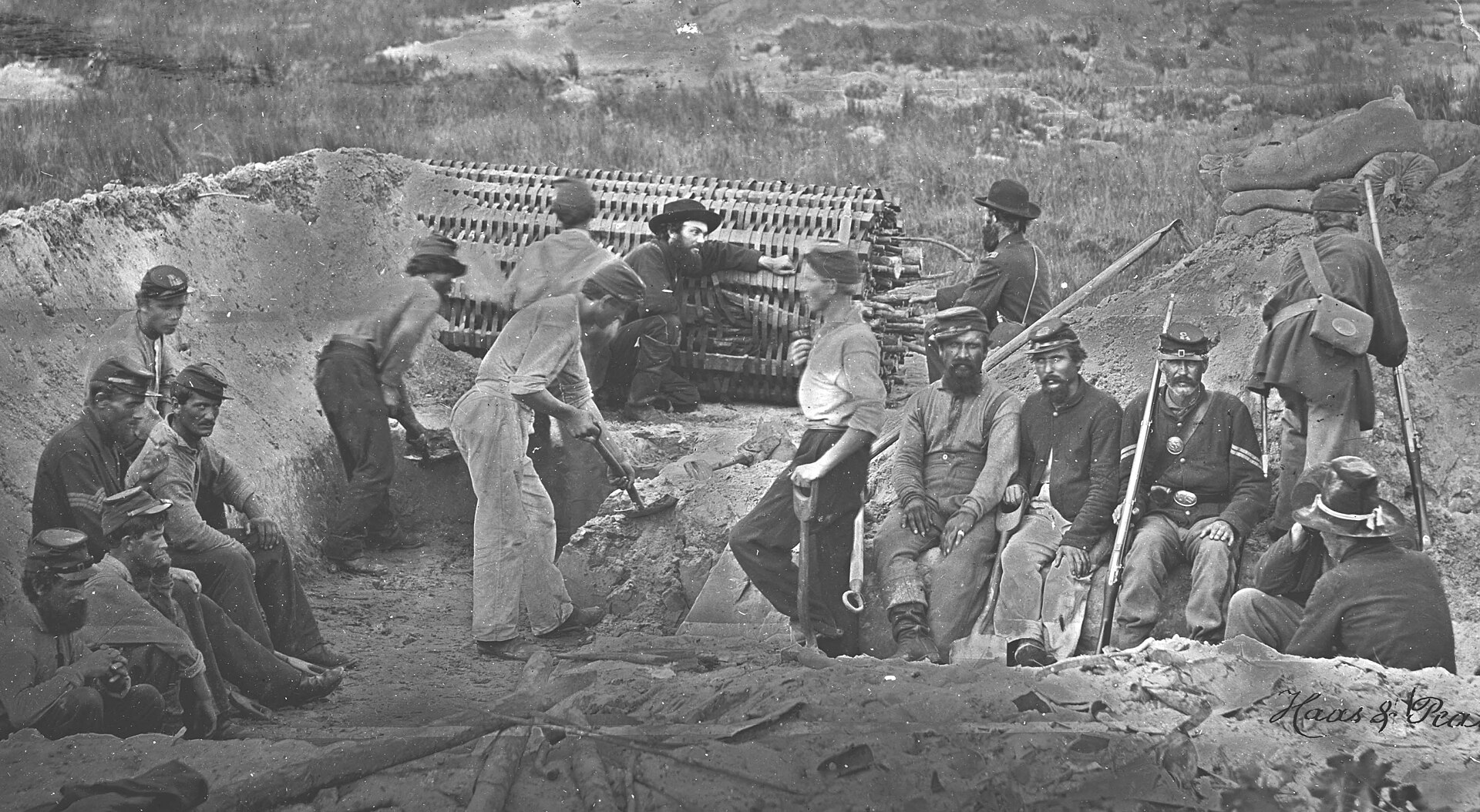
On September 7, 1863, during the American Civil War, Union forces occupied Fort Wagner and Battery Gregg on Morris Island, South Carolina, after Confederate defenders quietly evacuated the positions during the night of September 6–7. Pressured by advancing Federal siege works, sustained land-based bombardment, and naval operations in Charleston Harbor, the Confederates abandoned the sand fortifications and withdrew by boat across the harbor. Union troops subsequently secured all of Morris Island.
The occupation concluded a brutal summer campaign that drew national attention and imposed severe losses on both sides. Fort Wagner was the scene of the famous July 18 assault led by the 54th Massachusetts Infantry, one of the Union Army’s best-known Black regiments. The attack failed to take the fort and cost the regiment more than 250 killed, wounded, or captured out of roughly 600 men engaged, including its commander, Colonel Robert Gould Shaw. Yet the regiment’s conduct became an enduring and widely publicized demonstration of the courage and discipline of Black Union soldiers.
After the failed frontal assault, Union commander Quincy A. Gillmore shifted to methodical siege operations. Federal engineers pushed trenches and batteries progressively closer to Fort Wagner, while Army and naval guns maintained pressure on the Confederate garrison. After roughly sixty days of siege conditions, constant shelling, and the prospect of an imminent assault, the Confederates judged Wagner and nearby Battery Gregg untenable and evacuated them.
Control of Morris Island strengthened the Union position at the entrance to Charleston Harbor and gave Federal forces improved bases from which to continue operations against Fort Sumter, Charleston’s defenses, and the city itself. It did not, however, bring about Charleston’s immediate fall: the Confederacy retained important harbor defenses, and a Union assault on Fort Sumter on September 8 was repulsed. Fort Wagner nevertheless remains a significant symbol of the Charleston campaign, of Civil War siege warfare, and of the consequential role Black soldiers played in preserving the Union and destroying slavery.
Image: Image: 1st New York Volunteer Engineer Regiment digging a trench with a sap roller on Morris Island, 1863. Photograph by Haas & Peale, via Library of Congress; public domain.
