
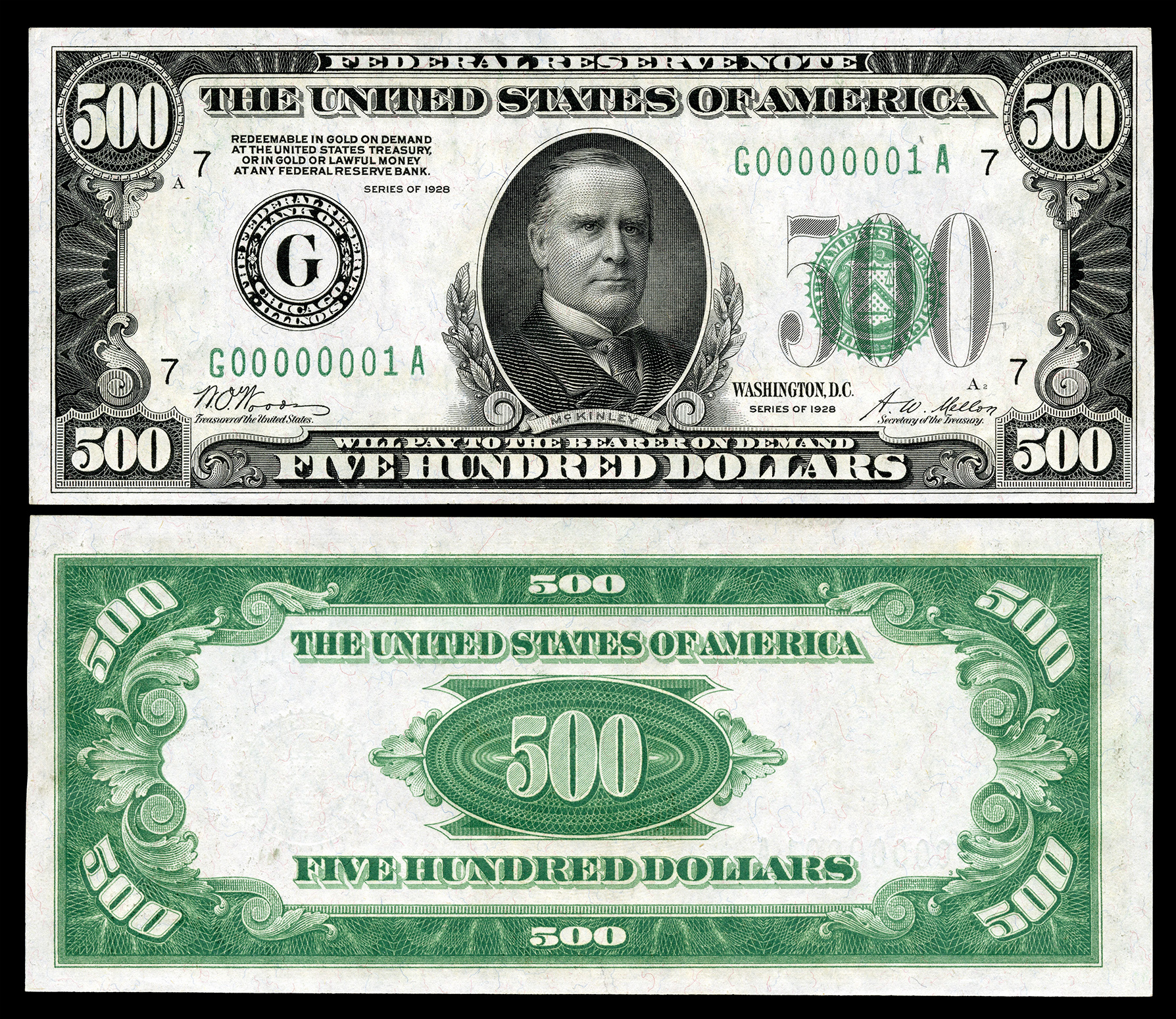
On July 14, 1969, the Federal Reserve officially discontinued high‑denomination currency, permanently halting the circulation of $500, $1,000, $5,000, and $10,000 banknotes across the United States. Featuring iconic historical leaders like President William McKinley on the $500 bill, these high‑value notes are today prized by collectors, leaving only seven standard denominations in active production.
The deeper, often overlooked motivation behind the retirement of these giant banknotes was the growing concern among federal officials that such large denominations made illicit cash movement far too easy. Although the public explanation emphasized the rise of electronic banking and declining legitimate use, Treasury and law‑enforcement agencies had long noted that organized crime networks favored $500 and $1,000 bills for discreet, high‑value transfers. By withdrawing the notes from circulation, the government forced criminals to rely on bulky stacks of $100 bills, making large‑scale cash smuggling significantly harder to conceal.
Image Source: Image via Wikimedia Commons, public domain
