
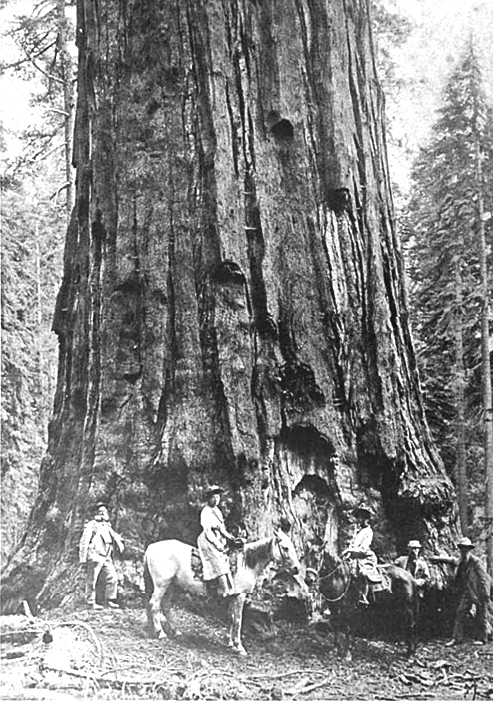
On September 25, 1890, President Benjamin Harrison signed legislation establishing Sequoia National Park in California’s southern Sierra Nevada. The act created the nation’s second national park, after Yellowstone, and the first established specifically to protect a living organism: the giant sequoia. Its immediate purpose was to safeguard these extraordinary trees from destructive logging.
The park protects part of a remarkable mountain landscape of forests, high country, rivers, and granite peaks, including the Giant Forest. Among its best-known residents is the General Sherman Tree, a giant sequoia estimated to be more than 2,000 years old and recognized as the world’s largest living single-stem tree by volume.
Sequoia’s creation reflected a growing late-nineteenth-century conservation movement. Residents of California’s San Joaquin Valley and other advocates pressed Congress to protect Sierra Nevada groves threatened by logging, while naturalist John Muir helped shape public appreciation for the giant sequoias through his writing and exploration of the region.
The original park was modest in size, but Congress enlarged it soon afterward, including the Giant Forest and surrounding land. Later additions—including the Kern Canyon and Mount Whitney areas in 1926 and Mineral King in 1978—helped form much of the park known today. Sequoia National Park remains a foundational achievement in the history of American conservation.
Image: John Muir with family and friends at the General Sherman Tree, 1902. Wikimedia Commons, public domain.
