
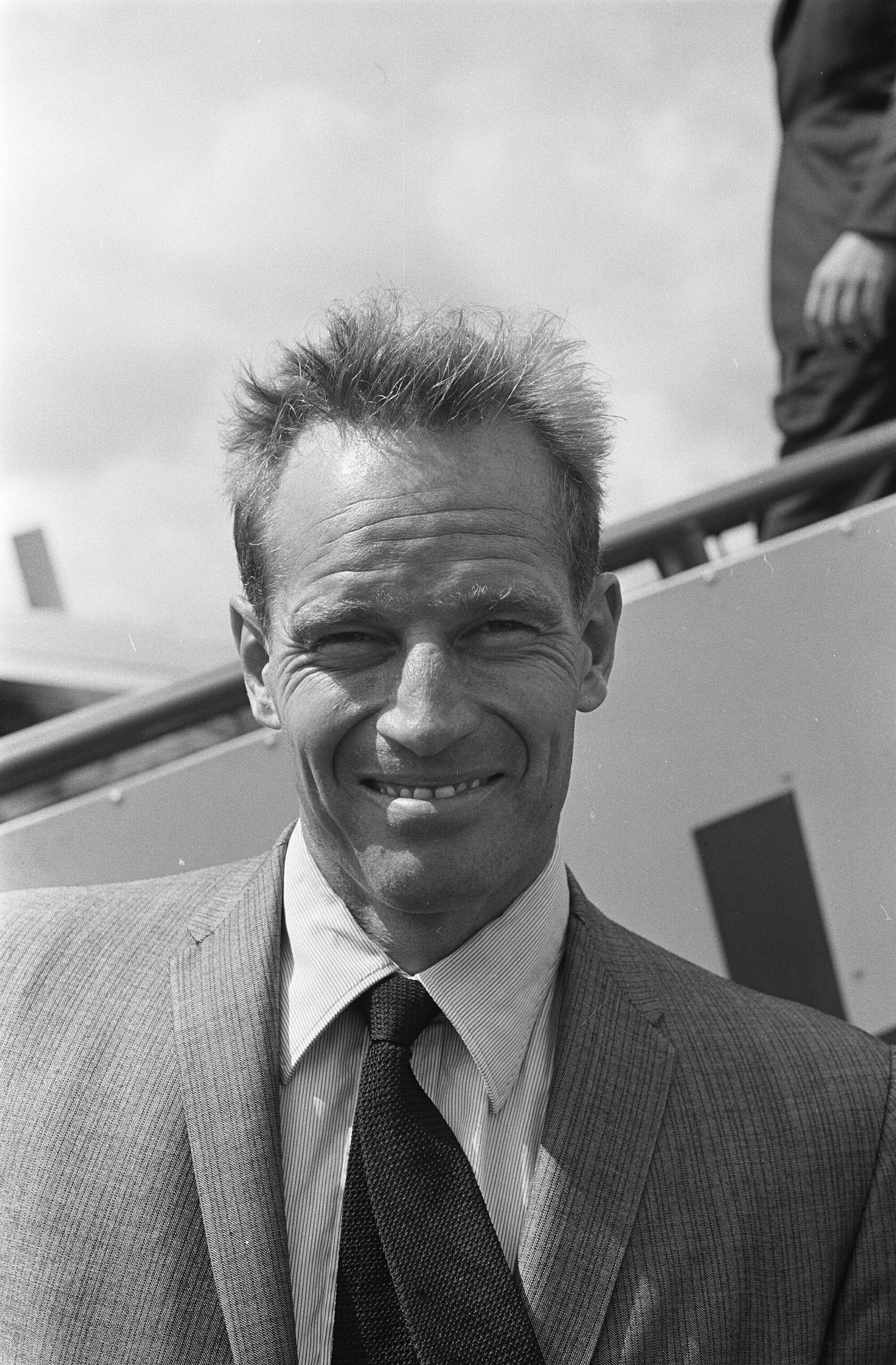
On October 4, 1923, Academy Award-winning actor and prominent public activist Charlton Heston was born John Charles Carter in Evanston, Illinois. Blessed with a commanding physical presence, a resonant baritone, and unusual dramatic gravity, Heston became one of the defining leading men of mid-century Hollywood epic cinema. He permanently entered popular culture through monumental performances as Moses in The Ten Commandments, Judah Ben-Hur in Ben-Hur, and other larger-than-life figures drawn from history, scripture, and literature. Heston won the Academy Award for Best Actor for Ben-Hur.
Before his screen career made him an international star, Heston served in the U.S. Army Air Forces during World War War II. Stationed in the Aleutian Islands, he worked as a radio operator and aerial gunner aboard B-25 Mitchell bombers, ultimately reaching the rank of staff sergeant.
Heston’s career was also marked by sustained public engagement. During the civil-rights era, he publicly supported racial equality and took part in the historic March on Washington for Jobs and Freedom on August 28, 1963, alongside figures including Martin Luther King Jr., James Baldwin, Marlon Brando, and other activists and artists. In later decades, his politics shifted decisively rightward, and he became a nationally prominent conservative voice and president of the National Rifle Association from 1998 to 2003.
Heston’s life bridged Hollywood spectacle, moral drama, military service, and public advocacy. His birth on this day marked the arrival of a cultural titan whose performances and deeply held convictions made him both a reflection of—and an active participant in—the changing civic life of twentieth-century America.
Image via Wikimedia Commons
