
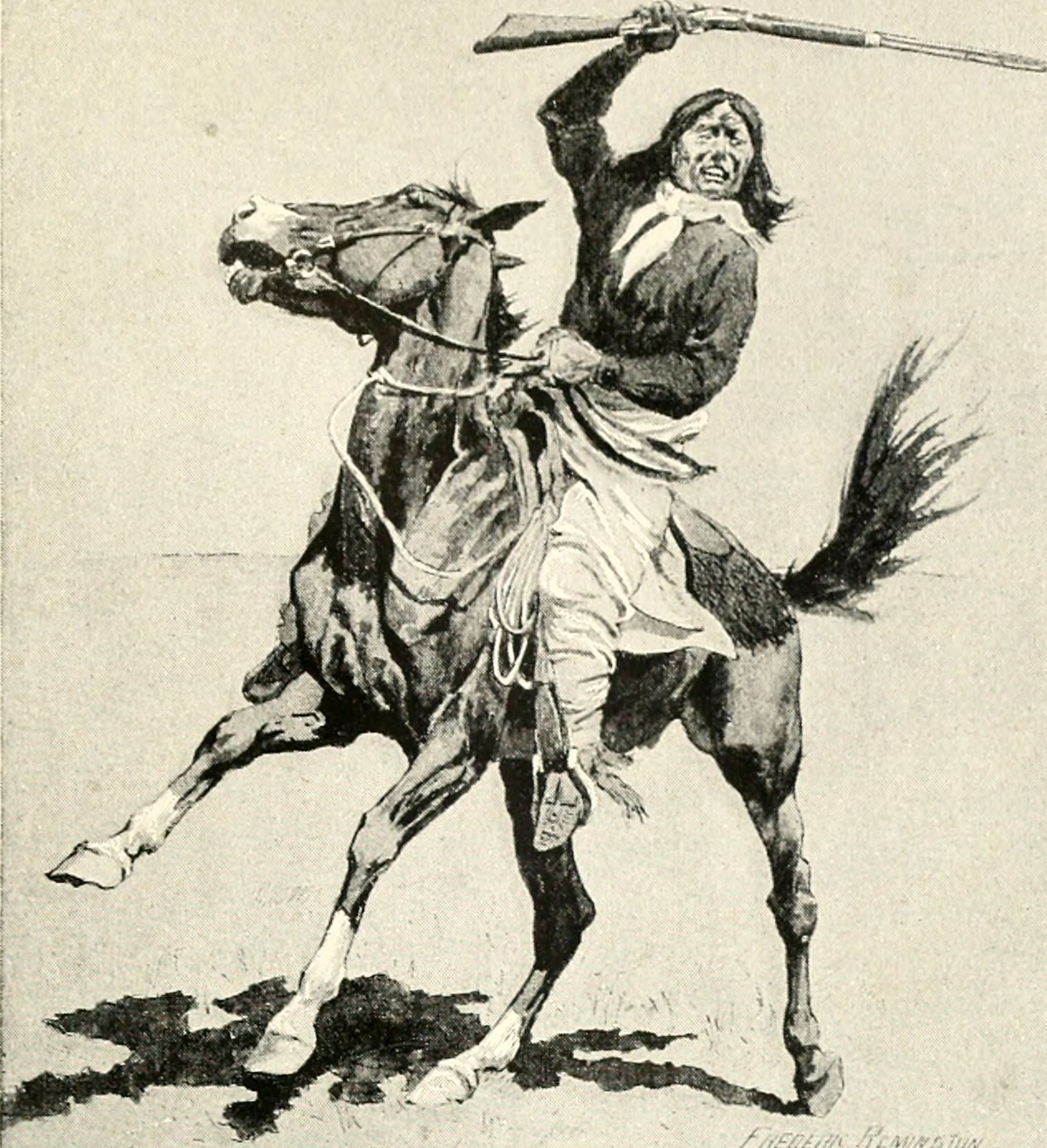
On October 13, 1864, during the American Civil War, a large force of Kiowa and Comanche warriors—probably numbering in the hundreds—launched the Elm Creek Raid in western Young County, Texas. With many regular U.S. Army forces withdrawn from the frontier to fight in the East, local defense depended on scattered Confederate troops, Texas Rangers, and civilian settlers. The raiders swept through the Elm Creek valley, attacking isolated homes and ranches, burning buildings, killing settlers and soldiers, and driving off large numbers of cattle.
The fighting was especially severe around the fortified cabin at the George Bragg ranch, where several settler families had gathered for protection. Despite being badly outnumbered, the defenders held off repeated assaults, though the raiders continued through the surrounding settlement, destroying property and taking captives.
The raid resulted in the deaths of several settlers and Confederate soldiers and the capture of women and children. Among those affected was the family of Britton “Britt” Johnson, a formerly enslaved African American frontiersman, teamster, and scout. Johnson’s son Jim was killed in the attack, while Johnson’s wife, Mary, and two children were taken captive.
Johnson later became a celebrated figure on the Texas frontier for seeking the return of his family. However, historians debate the details of the rescue: while later accounts credit Johnson with traveling alone into Indian Territory and negotiating for his wife and children, the best-documented account indicates that Comanche chief Asa-Havey ransomed and released the captives during peace negotiations in June 1865.
The Elm Creek Raid remains one of the largest and most consequential Native American operations against the Texas frontier during the Civil War era. It illustrates the vulnerability of isolated settlements in North Texas and the violent overlap between the Civil War, westward expansion, and conflict over the Southern Plains.
