
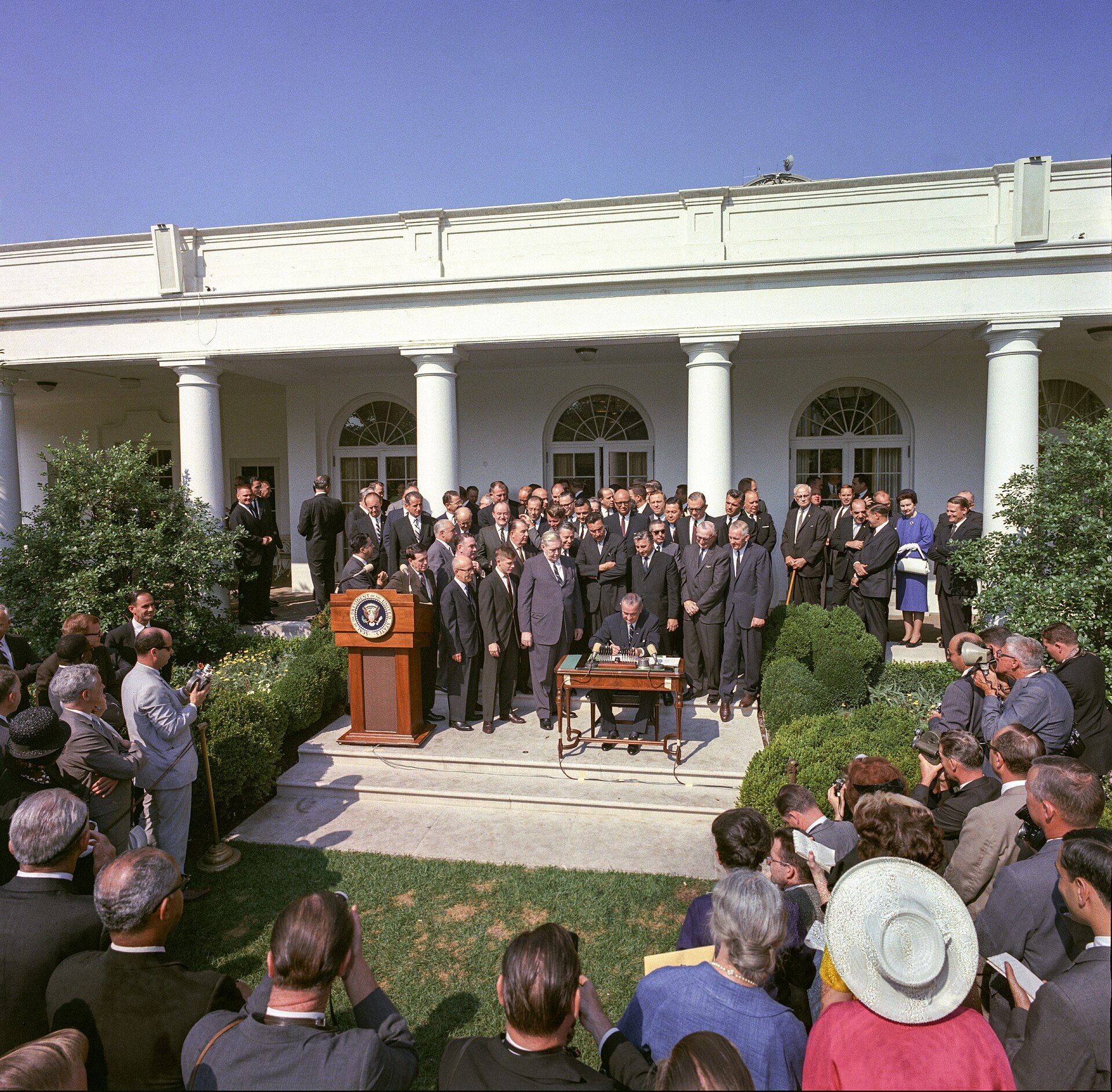
On August 20, 1964, President Lyndon B. Johnson signed the Economic Opportunity Act in the White House Rose Garden, cementing the legislative foundation of his War on Poverty. After touring impoverished communities across Appalachia and urban America, Johnson sought to build a federal safety net that could break generational cycles of deprivation.
The act created Job Corps, Head Start, and community action programs, offering education, job training, and health services to millions. Under the leadership of Sargent Shriver, the Office of Economic Opportunity became the engine of Johnson’s Great Society, reshaping the relationship between citizens and the federal government.
Image via Wikimedia Commons, public domain
