
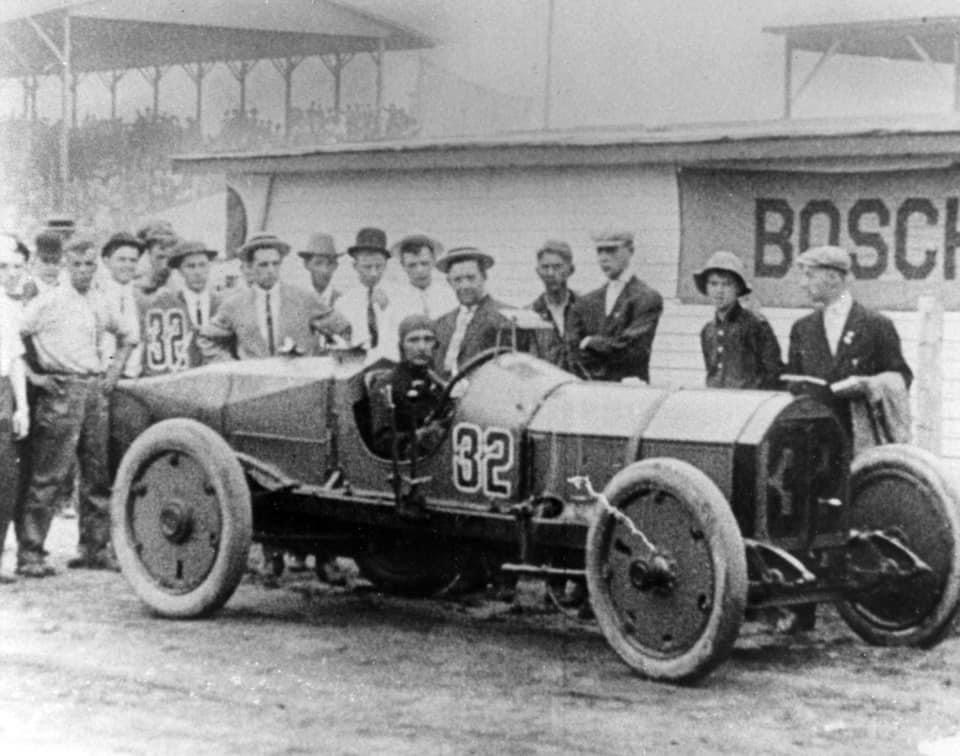
On May 30, 1911, the very first Indianapolis 500 roared to life, forever reshaping American motorsport. At the center of the dust and thunder was the bright yellow Marmon Wasp, number thirty‑two, piloted by Ray Harroun, who pioneered the revolutionary rear‑view mirror to avoid carrying a riding mechanic. Harroun averaged an astonishing seventy‑four miles per hour over six hours of grueling competition, carefully managing his tires and relying on the Wasp’s lightweight, streamlined body to outlast the field. His historic victory was more than a triumph of speed — it was a declaration that engineering ingenuity could push the limits of what machines and humans could achieve together.
