
On October 13, 1775, the Continental Congress, meeting in Philadelphia, passed a historic resolution to purchase and fit out two armed vessels for a three-month cruise to intercept British transports carrying munitions and supplies. This action is regarded as the birth of the Continental Navy, the direct forerunner of the United States Navy.
Congress soon established a Naval Committee—including John Adams—to oversee the purchase, outfitting, manning, and operations of the new fleet. Although the Revolutionary-era Navy could not challenge the British Royal Navy head-on, it established an enduring American tradition of maritime defense.
After the Continental Navy was dissolved following the Revolution, Congress reestablished a standing navy through the Naval Act of 1794, authorizing six frigates, including the USS Constitution. Each October 13, the Navy marks the anniversary of the 1775 resolution as its official birthday—a lineage running from two armed wooden vessels to today’s carrier strike groups projecting American power across the world’s oceans.
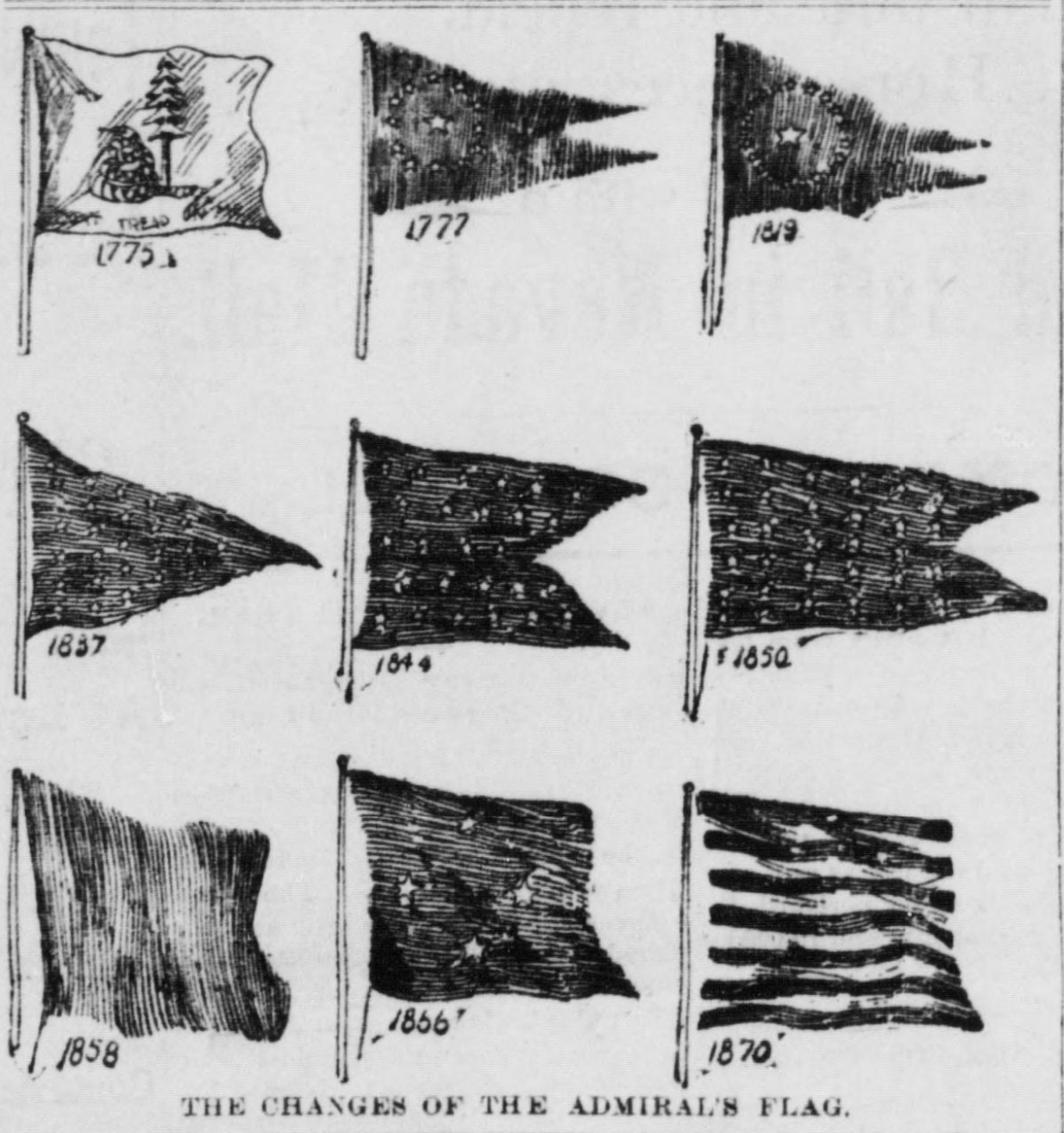
Image: This chart traces the development of U.S. naval command flags and officer ranks from the Continental Navy’s establishment on October 13, 1775, through the post–Civil War era. Early Congresses avoided permanent admiral ranks, reflecting republican resistance to European-style hierarchy; captains commanding squadrons used the title and broad pennant of commodore. The Civil War’s expansion of the Navy led Congress in 1862 to create commodore and rear admiral ranks, followed by vice admiral and admiral for David Farragut later in the decade.
