
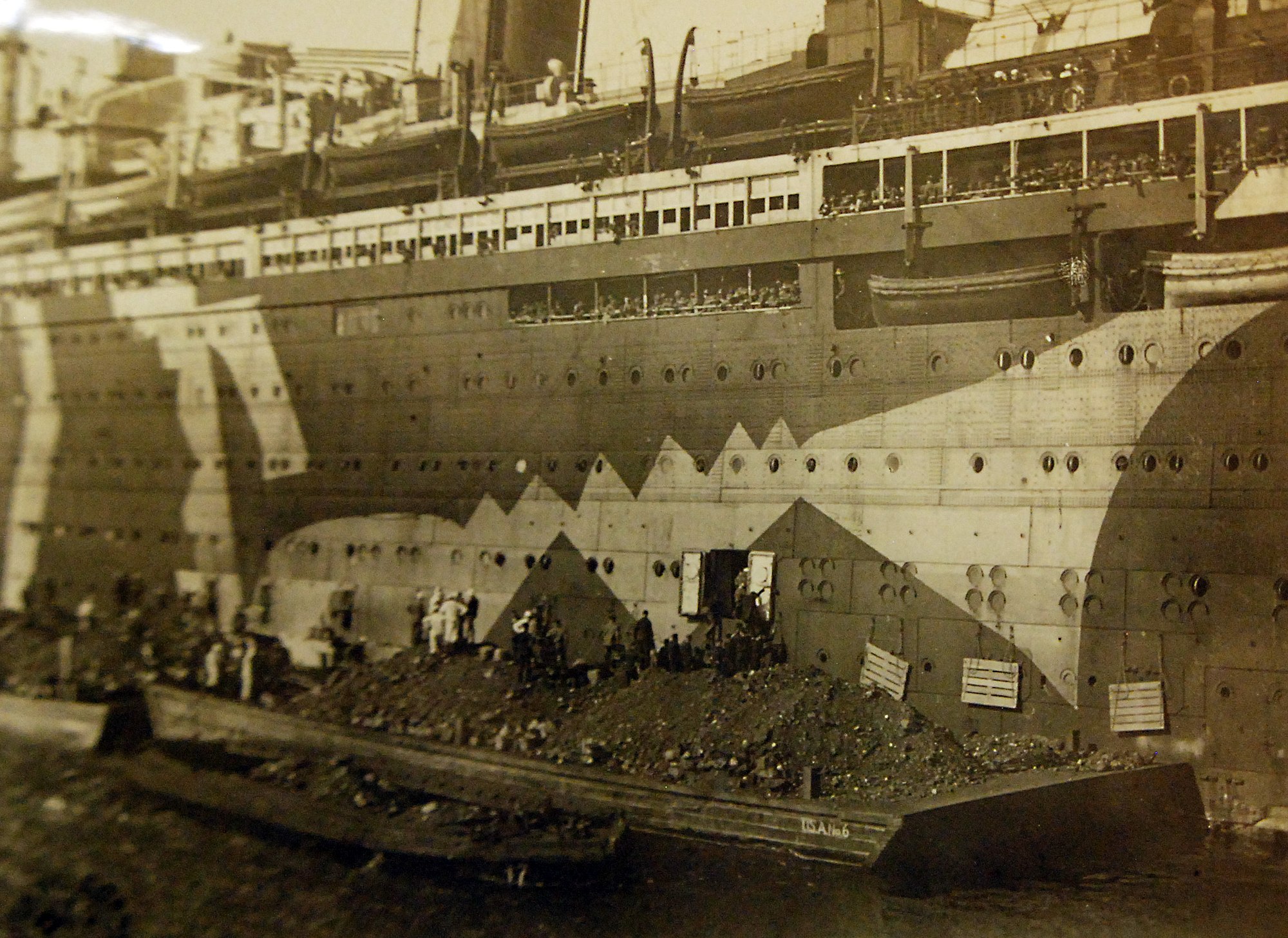
The USS Leviathan rested in the waters of Brest, France, on May 30, 1918, consuming mountains of coal as it prepared for another voyage across the submarine‑haunted Atlantic. Once the German luxury liner Vaterland, the fifty‑four‑thousand‑ton colossus was the largest ship in the world when launched, stretching nearly one thousand feet from bow to stern. Seized by the United States and refitted into a massive troopship, it could carry more than fourteen thousand soldiers at a time, moving entire divisions to the Western Front with its powerful turbine engines. Within its vast steel hull, the elegance of peacetime had given way to the gritty heartbeat of a generation sailing toward a war that would reshape the world.
