
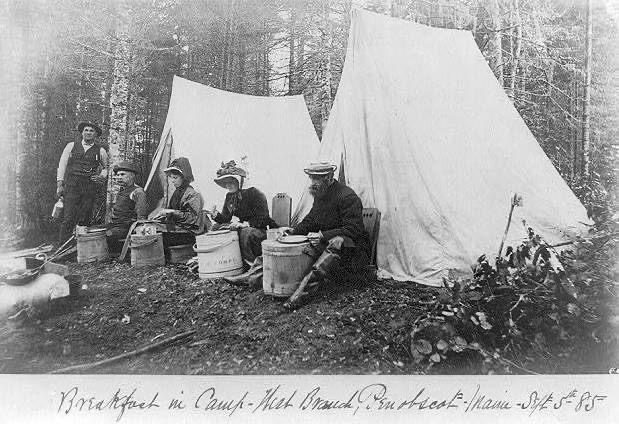
On September 5, 1885, an amateur photograph recorded an informal group gathering for an early morning breakfast at a remote logging camp along the West Branch of the Penobscot River in northern Maine. The archival image captures the rudimentary living conditions and everyday domestic routines of the regional timber workers who powered the state’s massive lumber economy.
Long before automated machinery and modern transportation revolutionized forestry, logging operations in the dense Maine woods relied entirely on extensive manual labor, draft animals, and seasonal river networks. Crews spent long, isolated winter months cutting timber and clearing trails, preparing logs to be floated downstream to coastal sawmills and shipping centers during the spring thaws.
The logging camp functioned as a self-contained, temporary frontier community built around a shared dining shack and bunkhouse. Photographs from this era preserve an invaluable social record of the physical labor, discipline, and basic neighborhood-scale cooperation required to sustain the workers who cleared the northern wilderness during the peak of the historic American lumber boom.
Image via Wikimedia Commons, public domain
