
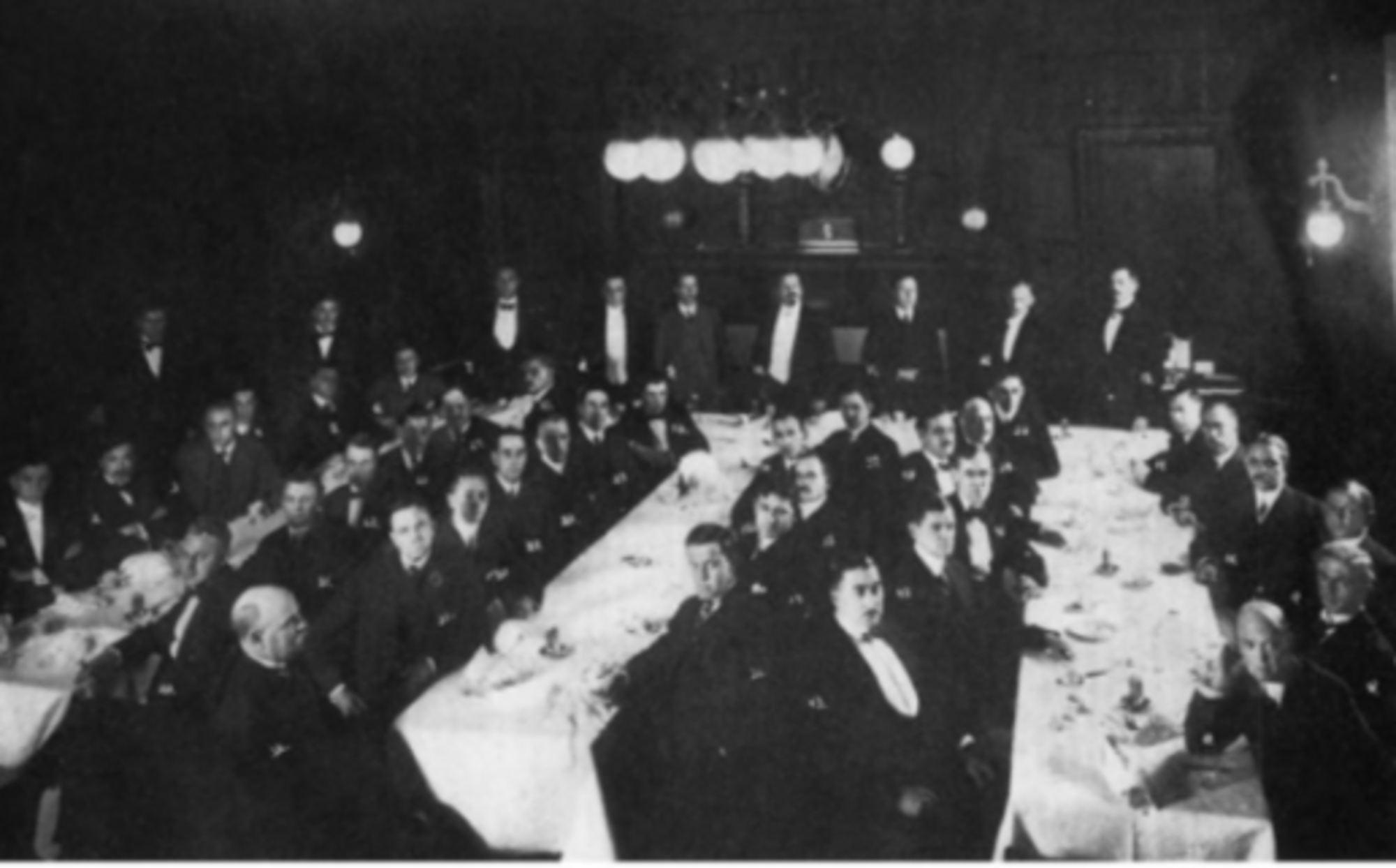
On the evening of November 7, 1914, a gathering at the City Club in New York City marked the founding of the Casualty, Actuarial and Statistical Society of America. The occasion brought together professionals concerned with a pressing challenge of industrial life: how to measure the financial consequences of accidents and build insurance systems capable of meeting them. Rather than a sudden invention of a new discipline, the gathering represented a milestone in organizing mathematical and statistical expertise around an expanding field of public concern.
The immediate context was the spread of state workers’ compensation laws. For injured workers and their families, seeking compensation through the courts could be costly, uncertain, and slow. The new laws sought to replace that uncertainty with a more predictable system of benefits for workplace injuries. But the promise of compensation posed practical questions: How frequently would accidents occur? What would benefits cost? What premiums and reserves would insurers need to meet their obligations? Answering those questions required reliable data and methods suited to the risks of industrial employment.
The society, whose early leaders included Isaac Rubinow, provided a forum for developing and exchanging that expertise. Its significance lay not in making industrial risk precisely knowable, but in helping establish systematic ways to estimate its costs and prepare for its consequences. The inaugural dinner offers a revealing view of that broader transformation: a profession taking shape where mathematics, insurance, and social policy met. Behind the formal occasion stood a practical ambition—to help make the promise of financial protection for injured workers sustainable.
