
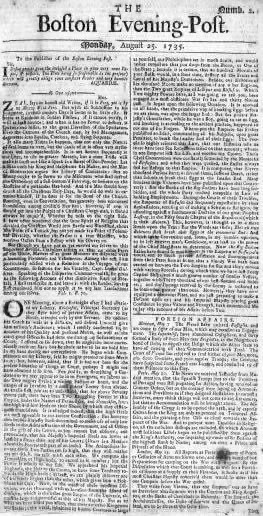
The residents of Boston, Massachusetts, found a periodical with a new name available in their city on August 18, 1735, when The Boston Evening-Post was first published. The debut of Thomas Fleet’s Boston Evening-Post was a radical milestone in the history of American journalism that introduced a fresh level of editorial objectivity to the colonial press.
Prior to 1735, early Boston newspapers were typically divided into two problematic categories: they were either dry, government-censored sheets that blindly supported the British Crown, or highly partisan religious pamphlets that fueled bitter theological disputes across the colony. Fleet, an experienced printer with a sharp business mind, envisioned an independent evening paper that prioritized reliable commercial intelligence, maritime shipping news, and open political debate.
By opening his columns to writers from all political and religious factions, Fleet transformed the Evening-Postinto one of the most widely read and commercially successful periodicals in British North America. His commitment to printing foreign news dispatches and local legal notices without immediate editorial bias established early structural standards for professional journalism, helping to train a generation of Bostonians to use the public press as a critical tool for civic accountability and economic growth.
Image: Photo of The Boston Evening-Post from a week later, printed on August 25, 1735 via Wikimedia Commons, public domain
