
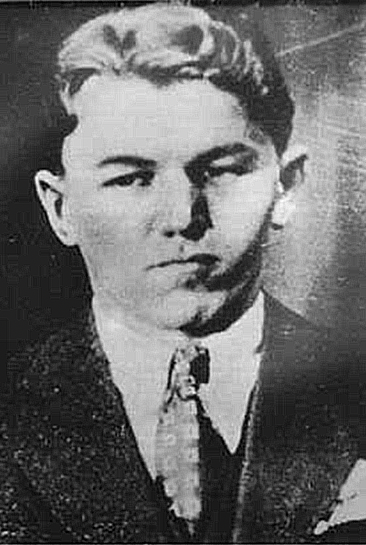
On August 18, 1933, Lester Gillis—better known as “Baby Face Nelson”—made his violent debut on the national stage by robbing the Peoples Savings Bank in Grand Haven, Michigan. With five gunmen and a plan that unraveled fast, Nelson escaped with roughly $2,300, leaving behind chaos: a local shopkeeper fired a shotgun, the getaway driver fled in panic, and Nelson used bank employees as human shields to slip out a side door. Townspeople were injured, one accomplice was caught, and Nelson vanished—only to resurface as Public Enemy No. 1 after Dillinger’s death in 1934.
The chaotic bank raid marked a terrifying transformation in the evolution of midwestern Depression-era crime, introducing a volatile level of recklessness that shocked law enforcement. Unlike the disciplined, meticulously timed operations later executed by the John Dillinger gang, Nelson’s Grand Haven heist was a frantic, poorly coordinated assault that quickly degenerated into a close-quarters street battle. When an alert local hardware merchant opened fire on the bandits with a shotgun from across the street, Nelson erupted into a near-manic rage, spraying the crowded sidewalk with submachine gun fire to secure a retreat.
The violent getaway from the Peoples Savings Bank exposed the extreme vulnerability of small-town police forces when facing heavily armed, motorized outlaws who utilized state lines to evade capture. By aggressively utilizing innocent bank cashiers as physical shields to block the gunfire of local citizens, Nelson demonstrated a cold disregard for human life that would eventually prompt the FBI to mark him as one of the most dangerous men in America. The Grand Haven robbery served as a vital, high-stakes trial run that allowed Nelson to refine his lethal tactics, forging the criminal connections that would soon terrorize the entire nation.
Image: Department of Justice identification photograph of bank robber Lester Gillis, better known as Baby Face Nelson via Wikimedia Commons, public domain
